What “Spock eyebrows” actually means
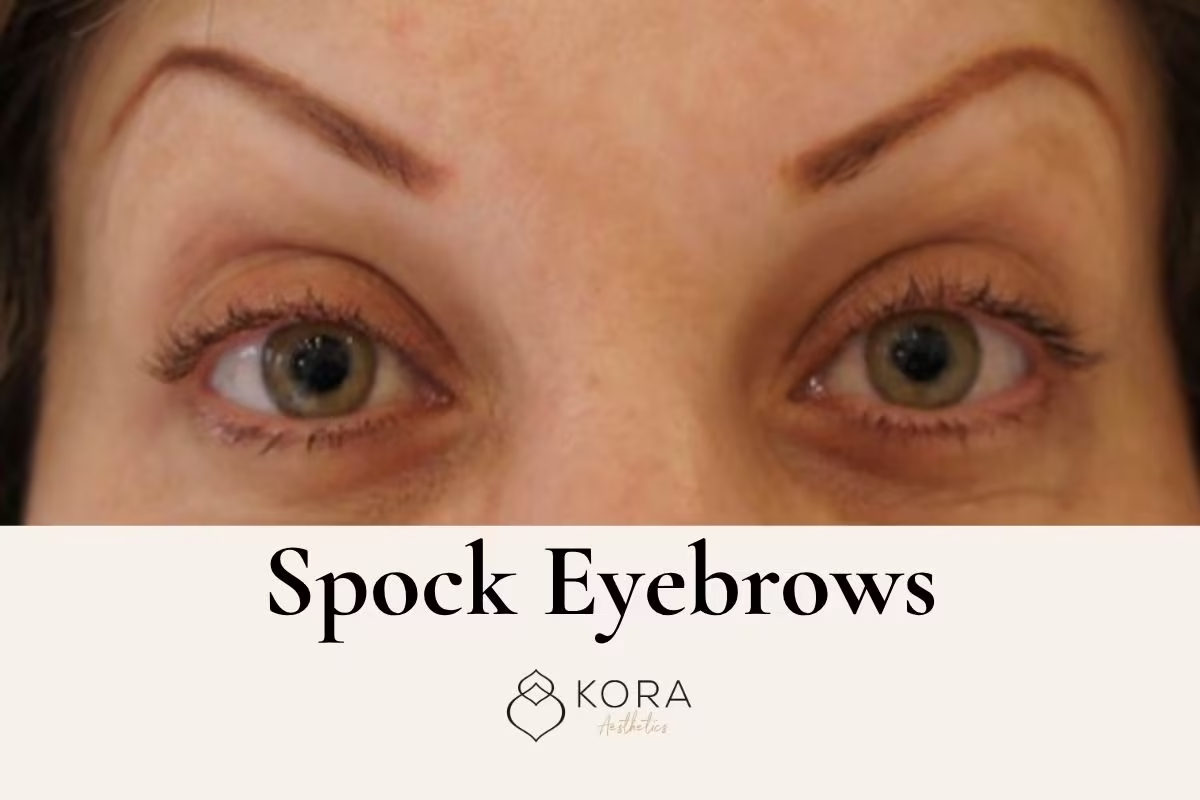
The name comes from the arched, peaked eyebrow shape it produces – an outer brow that sits noticeably higher than the inner brow, similar to the raised eyebrow look associated with the Star Trek character. It is a real, well-documented outcome of forehead treatment, not just an internet term.
Why it happens
The forehead muscle, the frontalis, does not act as a single uniform sheet – different sections can be more or less active than others. Spock brow happens when the central and inner parts of the muscle are relaxed effectively, but the outer, lateral fibers remain more active. Those still-active outer fibers keep pulling the outer brow upward while the rest of the forehead has settled, creating the peaked, arched appearance.
This is a treatment planning and technique issue – specifically, not accounting fully for the outer frontalis fibers when mapping the treatment – rather than something inherent to Botox itself or a sign that anything went seriously wrong.
Is it permanent?
No. Like any Botox effect, it follows the same normal timeline and resolves on its own as the treatment wears off, typically within the usual 3 to 4 month window.
Can it be corrected sooner?
Often, yes. A small touch-up dose targeted specifically at the still-active outer frontalis fibers can rebalance the forehead and soften the peak, usually well before the full three to four months. This is a common and straightforward correction, not a complicated fix – contact your injector rather than waiting it out if it is bothering you.
Preventing it next time
This comes down to the treatment plan accounting for the full pattern of the frontalis muscle, including the outer fibers, rather than focusing only on the central forehead. If you have experienced this before, mention it at your next appointment – it is useful information for how your injector maps the treatment.
Questions people ask
What causes Spock eyebrows after Botox?
Uneven treatment of the frontalis muscle – the central forehead relaxes while the outer, lateral fibers remain more active, pulling the outer brow up higher than the rest.
Will it go away on its own?
Yes, it follows the normal Botox timeline and resolves as the treatment wears off, typically within 3 to 4 months.
Can it be fixed without waiting months?
Usually, yes. A small touch-up dose to the still-active outer forehead fibers can rebalance the look well before the full effect wears off.
How do I prevent this happening again?
Mention it to your injector at your next appointment so the outer frontalis fibers are accounted for in the treatment plan, not just the central forehead.
Noticing an uneven brow after treatment?
A nurse practitioner-led practice in Scottsdale, Arizona.