Rated 5.0 on Google

Dermal Fillers in Scottsdale

Dermal fillers are hyaluronic acid gels, such as Restylane and Revanesse, that restore volume in the cheeks, jawline, chin, temples, lips and under-eyes. At our Scottsdale clinic, treatment takes 30 to 60 minutes, priced by area starting at $650+. Results settle at two weeks and last 9 to 18 months. A board-certified nurse practitioner injects.

  • Founder trains for Galderma & Prollenium
  • Injected only by a nurse practitioner
  • Complimentary consultation
  • Reversible hyaluronic acid

Medically reviewed by Katie Manhardt, MSN, FNP-C · Updated November 2026

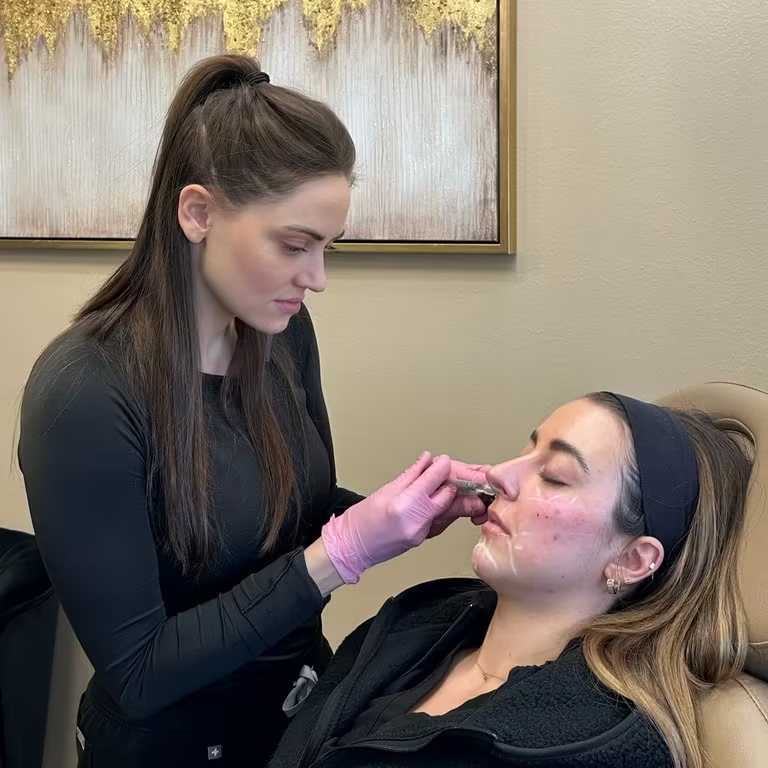
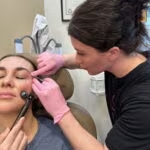
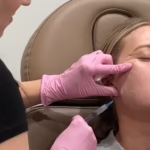
Expert injector administering a structured dermal filler treatment in Scottsdale
Price by area
Starting at $650+
Appointment
30-60 minutes
Results
Immediate, settled at 2 weeks
Typically lasts
9-18 months
Reversible
Yes, with hyaluronidase
The Facial Balancing Event

Current offer · Ends Nov 30, 2026The Facial Balancing Event: On 2 or more syringes of dermal fillerDermal filler planned around the whole face: cheeks, chin, jawline, lips and smile lines.

Book this special

About the treatment

What are dermal fillers?

Short answer. Dermal fillers are hyaluronic acid gels that replace lost volume and add structure in the cheeks, temples, chin, jaw, lips and under-eyes. They treat hollows, not movement lines or loose skin, and can be dissolved.

Made of
Hyaluronic acid gel
Settled at
2 weeks
Lasts
9-18 months
Reversible
Yes, hyaluronidase

It is

  • A gel that replaces volume in a specific layer of the face
  • Reversible, because hyaluronic acid dissolves with hyaluronidase
  • Structural: cheek, chin, jaw and temple filler changes face shape
  • Visible at once, with swelling that settles over about two weeks

It is not

  • A treatment for movement lines, which respond to Botox or Dysport
  • A facelift: filler cannot tighten loose skin
  • A skin-quality treatment: pigment and texture respond to peels or microneedling
  • Lifelong: the body breaks hyaluronic acid down over months

How it works

  1. The source of the change is found. Facial fat sits in separate compartments that deflate at different rates, and bone recedes with age. The spot you notice, such as a fold, is often caused by loss one layer or one area away, such as the cheek.
  2. The gel is matched to the layer. Firm, highly cross-linked gels go deep on bone for structure at the cheek, chin and jaw. Soft, flexible gels go higher for lips and fine lines. The wrong gel in the wrong layer causes lumps or a heavy look.
  3. Cannula or needle. A blunt-tipped cannula pushes vessels aside rather than piercing them, so it is used in the tear trough, temples and midface. A fine needle gives precision on bone and at the lip border.
  4. Water binding and integration. Hyaluronic acid attracts water, so the area swells for several days, then settles. The gel integrates with surrounding tissue over about two weeks, which is when the result is judged.
  5. Gradual breakdown. Your own hyaluronidase enzymes and normal tissue turnover break the gel down over months. Mobile areas such as lips clear faster than still areas such as the chin, so duration differs within one face.

Candidates

Who are dermal fillers for?

Short answer. Fillers suit adults whose concern is lost volume or structure. Your nurse practitioner confirms this at a complimentary consultation, or recommends another treatment for loose skin, pigment or muscle movement.

A good fit

  • Yes

    Cheeks, temples or under-eyes that have hollowed Filler suits a flattened cheek, hollow temples or a deepened tear trough, and cheek support often softens the fold below.

  • Yes

    A recessed chin or a soft jawline A firm gel on bone adds chin projection or sharpens the jaw, the kind of structure men often want.

  • Yes

    Folds, mouth corners, lips and fine lip lines Smile lines, marionette lines, thin lips and lip lines are usually treated with cheek, chin or jaw support for balance.

  • Yes

    Neck lines and the backs of the hands Restylane Lyft is FDA-approved for volume loss in the backs of the hands; neck creases take tiny amounts of soft gel (off-label).

Wait, or choose something else

  • Wait

    Pregnant, trying to conceive or breastfeeding Because there is not enough safety data, the usual advice is to wait until after pregnancy and breastfeeding.

  • Wait

    An infection or cold sore at the site, or allergies Filler is not advised with an active infection or cold sore there, a hyaluronic acid or lidocaine allergy, or severe allergies or anaphylaxis.

  • Wait

    Autoimmune conditions, bleeding disorders or blood thinners Some autoimmune and bleeding disorders need discussion first; tell us every medication and supplement, and never stop a prescribed blood thinner without your prescriber.

  • Wait

    Loose skin, movement lines or pigment Filler cannot tighten loose skin; movement lines need Botox or Dysport, pigment and texture a VI Peel or microneedling, under-chin fullness Kybella.

Results

Dermal filler before and after

Short answer. Filler shows immediately, swells for 1 to 3 days and settles at about two weeks, when you judge it. It lasts 9 to 18 months; lips fade sooner, and cheeks, chin and jaw often last longer.

Immediate initial result · 2 weeks settled result · 9-18 months typical duration

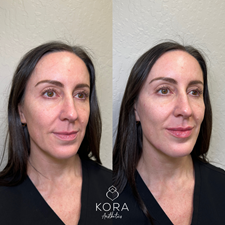
Before and after three-quarter facial view showing facial balancing with dermal filler, including improved cheek support, lip fullness, and facial harmony in ScottsdaleBeforeAfter
Dermal FillersDermal Filler Facial Balancing patient #441Subtle facial balancing with enhanced cheek support, lip fullness, and improved overall harmony in ScottsdaleRead the full case
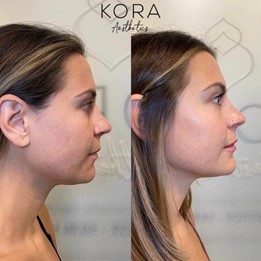
Side profile before and after facial balancing with dermal filler showing enhanced cheek contour, chin projection, and jawline definition in ScottsdaleBeforeAfter
Dermal FillersDermal Filler Facial Balancing patient #436Improved cheek support, chin projection, and jawline contour with facial balancing dermal filler in ScottsdaleRead the full case
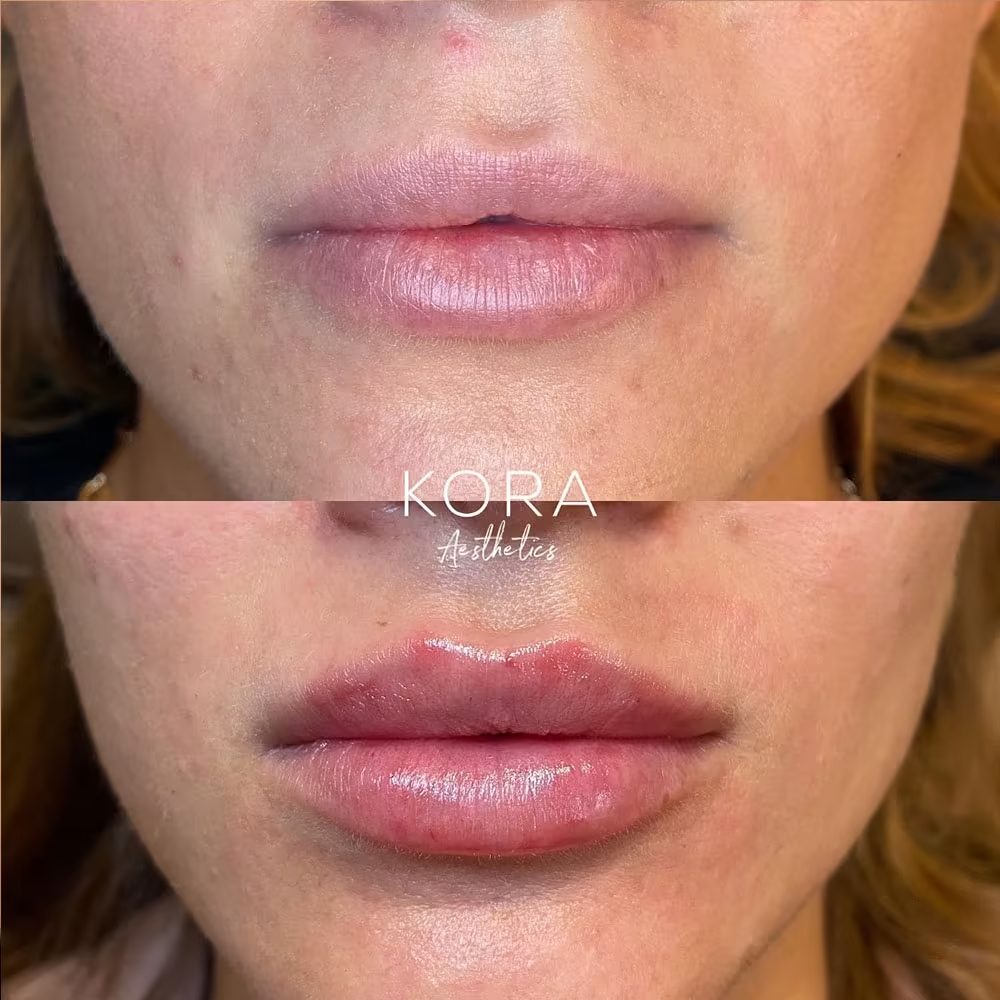
Before and after lip filler injection creating a fuller, more defined lip shape in ScottsdaleBeforeAfter
Dermal FillersDermal Filler Lips Fillers patient #412Enhanced lip volume and refined Cupid's bow contour achieved with dermal fillers in ScottsdaleRead the full case

Individual results vary. Photos show KORA patients. Compare before and after images at two weeks or later, when swelling has resolved.

View the filler gallery

From our YouTube channel

Watch: dermal fillers in short videos

Short video

What are dermal fillers?

A short video from KORA explaining what dermal fillers are.

Watch on YouTube (opens in a new tab)
Short video

Facial balancing

A short video from KORA on facial balancing: planning filler across the whole face rather than one area.

Watch on YouTube (opens in a new tab)
Short video

Facial balancing before and afters

Facial balancing before-and-after results from KORA Aesthetics.

Watch on YouTube (opens in a new tab)
Short video

How long do our most popular treatments last?

A short video from KORA on how long its most popular treatments typically last.

Watch on YouTube (opens in a new tab)

Cost

How much do dermal fillers cost in Scottsdale?

Short answer. Fillers at KORA are priced by area, from $650+ for smile lines to starting at $1500+ for the jawline. Your written total depends on product and syringe count, with no minimum. The consultation is complimentary.

Estimate your filler total: pick your areas
Estimated totalFrom $1,400Confirm it at a free consultationTotals add the starting price for each area you pick, so they are estimates. Your product, syringe count and final total are confirmed in writing at your complimentary consultation, with no minimum.
  • Complimentary consultation and facial mapping
  • Topical numbing
  • Written aftercare
  • Complimentary two-week review after a first filler treatment

Full dermal fillers price list and pricing questions

Treatment areaTypical syringesPricedStarting price
Temples1-2Per areaStarting at $800+
Cheeks1-2Per areaStarting at $750+
Under Eyes0.5-1Per areaStarting at $750+
Smile Lines (Nasolabial Folds)1Per areaStarting at $650+
Shadows around the Mouth1-2Per areaStarting at $650+
Chin1-2Per areaStarting at $750+
Jawline2-4Per areaStarting at $1500+
Neck Lines1Per areaStarting at $650+
Hands1-2 per handPer areaStarting at $1400+
ConsultationIncludedIncludedComplimentary

Priced separately

  • Filler dissolving, priced separately
  • Sculptra, priced separately
  • Botox or Dysport, priced per unit
How much is one area of filler in Scottsdale?

At KORA, one area starts at $650+ for smile lines and rises to starting at $1500+ for the jawline, which needs more product. Your exact total is set at consultation once we know the product and syringe count.

How many syringes of filler will I need?

A first treatment commonly uses 1 to 2 syringes. Structural jaw and chin work can take 2 to 4. We start conservatively and can add more at your two-week review once swelling has settled.

Is there a minimum number of syringes?

No. There is no minimum and no package. If half a syringe at the chin balances your profile, that is the recommendation.

How much does it cost to dissolve filler?

Filler dissolving is priced separately, starting at $300+ per session. It applies to hyaluronic acid filler from any provider.

Starting prices per area | Syringe counts are typical ranges, confirmed at consultation | No minimum | Consultation is complimentary

Product and syringe count are agreed at consultation. No minimum number of syringes. Filler dissolving is priced separately.

Why KORA for dermal fillers

Who will treat you

Short answer. Filler is placed only by board-certified nurse practitioners Katie Manhardt, Audrey Bakken and Dana Nichols. Katie founded KORA and is a national clinical trainer for Galderma and Prollenium, teaching injection technique and facial anatomy.

  • Founder: Galderma & Prollenium national clinical trainer
  • Board-certified nurse practitioners
  • Every treatment performed by an NP
  • Over a decade of aesthetic experience on the team
Katie Manhardt, MSN, FNP-C

Katie Manhardt, MSN, FNP-C

Founder | Nurse Practitioner

Katie founded KORA and is a national clinical trainer for Galderma and Prollenium, teaching injection technique and facial anatomy to other clinicians. She plans filler through facial balancing: assessing the face as one structure against its midline, supporting cheek, chin and jaw before chasing individual lines, and choosing the gel for each layer. Her stated rule is that knowing where not to inject is the harder skill.

Book with Katie
Audrey Bakken, NP

Audrey Bakken, NP

Aesthetic Nurse Practitioner

Audrey has more than 23 years in medicine and over ten years as an aesthetic injector. She works from each patient's own anatomy and long-term goals rather than a standard protocol, and aims for subtle results that leave you looking refreshed and still yourself. Her focus includes lip filler and lower-face rejuvenation, where small volumes at the chin, mouth corners and lip border change how the lower face reads.

Book with Audrey
Dana Nichols, NP

Dana Nichols, NP

Nurse Practitioner

Dana has been a nurse since 2013, spent nine years in intensive care, and qualified as a nurse practitioner in 2021, working in primary care, emergency medicine and nursing education before aesthetics. Dermal filler is one of her two focus areas. Her ICU background shows in close attention to detail and a calm room, and she favours balanced results that enhance your features rather than change them.

Book with Dana

What patients say about filler at KORA

5.0on Google

Mobile StoreGoogle review

Katie is truly the sweetest and such a professional in her craft. From the day of my first consultation to any appointment she truly makes sure your look is natural and is the first one to tell you if you don't need something. To this day my husband couldn't tell you where I get filler or didn't know I got Botox until I said something as all he pictured in his head was when you see the non-natural work. This is my face, so trusting and being comfortable with someone was so important, and it feels like home when I'm in Katie's chair.

Chelsie StumphGoogle review

I had an amazing experience with Katie! I was apprehensive to getting treatment because of bad results I've seen on friends from other injectors. Katie is incredibly knowledgeable. She shows you measurements of your face and explains how things should be done to keep you looking natural. She has done lip filler on myself and two other girlfriends and we all look so natural! I genuinely wouldn't trust anyone else so to my face.

Priscilla YoungerGoogle review

Kora is the place to go. Katie is the absolute best. I have been to another place and they don't compare to Katie she is awesome! She takes her time, she cares, and she helps make sure you are comfortable and happy with everything. I will not go anywhere else. Kora client for life!!! Lol

Good to know

More about dermal fillers

Each topic shows its short answer. Open it for everything else.

Dermal Fillers in detail

A dermal filler is a sterile gel injected beneath the skin to replace lost volume or add structure. Almost every facial filler today is hyaluronic acid (HA), a sugar molecule your skin makes to hold water, cross-linked into a gel that lasts months. In the United States, HA fillers are regulated by the FDA as Class III medical devices, each approved for specific areas such as the cheeks, lips, nasolabial folds, jawline, under-eyes or backs of the hands.

Filler does one job: it occupies space. It suits a flattened cheek, a hollow temple, a chin that sits back or a deepened tear trough. It is the wrong tool for loose skin, where added volume looks heavy, and for lines that appear only when you move, which respond to Botox or Dysport.

At KORA the filler families are Restylane (Galderma) and Revanesse (Prollenium), and Juvederm (Allergan) is also offered. The gels differ in firmness, lift, flexibility and how much water they attract. Your consultation decides whether your concern is volume at all, and which gel belongs in which plane. Most fillers contain 0.3% lidocaine, so the area numbs as treatment goes on.

HA filler can be dissolved with an enzyme called hyaluronidase, so the result stays adjustable. Sculptra (poly-L-lactic acid) and Radiesse (calcium hydroxylapatite) work differently and cannot be dissolved this way.

Treats
Flat cheeks and midface, under-eye hollows, temple hollowing, a recessed chin, soft jawline, nasolabial folds, marionette lines, thin lips, neck lines, volume loss in the hands
Material
Cross-linked hyaluronic acid gel, most with 0.3% lidocaine
Results
Visible immediately, settled at about 2 weeks
Duration
9-18 months depending on product and area
Reversible
Yes, hyaluronic acid filler dissolves with hyaluronidase

“The most beautiful filler results are the ones no one can point to.”

Katie Manhardt, MSN, FNP-C, Founder

Treatment areas and starting prices

Short answer: Cheeks, under-eyes, temples, chin, jawline, smile lines, marionette lines, lips, lip lines, neck lines, hands and filler for men, each with its own gel, duration and price.

Each area has its own anatomy, its own preferred gel and its own duration. Areas that move a lot, like the lips, break filler down faster than areas that sit still on bone, like the chin or jaw. Prices below are starting prices per area; your quote depends on product and number of syringes.

Cheek filler and midface

Lasts about 12-24 months

Restores midface projection

Gel is placed on the cheekbone to restore projection. Supporting the cheek often softens the nasolabial fold and the jowl below it without treating them directly. A first treatment commonly uses 1 to 2 syringes in total. Priced starting at $750+.

Under-eye filler (tear trough)

Lasts about 12-18 months

Softens under-eye hollows

A soft, low-swell gel is placed deep, usually with a blunt cannula, to soften a hollow between the lower lid and cheek. Only true volume loss responds; dark pigment, puffy fat pads or thin crepey skin do not. FDA-approved options include Restylane Eyelight (2023) and Juvederm Volbella XC (2022). Priced starting at $750+.

Temples

Lasts about 12 months or longer

Restores upper-face width

Hollow temples narrow the upper face and make the brow look heavier. A small volume placed deep restores a smooth oval. Juvederm Voluma XC was FDA-approved for temple hollowing in 2024; other gels used here are off-label, which we explain beforehand. Priced starting at $800+.

Chin filler

Lasts about 12-18 months

Balances the profile

A chin set slightly back throws off the profile, makes the nose look larger and the lips look fuller. A firm gel on bone adds projection or length, often with 1 to 2 syringes. Priced starting at $750+.

Jawline filler

Lasts about 12 months or longer

Defines a soft jawline

A firm, high-lift gel along the jawbone sharpens the line between face and neck. Structural jaw work often takes 2 to 4 syringes. If the jaw looks wide because of a strong masseter muscle, Botox (off-label) slims it instead. Priced starting at $1500+.

Smile lines (nasolabial folds)

Lasts about 9-18 months

Softens nose-to-mouth folds

The folds from nose to mouth. Often best softened by restoring the cheek above them first, then a small amount directly in the fold if needed. Priced starting at $650+.

Marionette lines and shadows around the mouth

Lasts about 9-12 months

Lifts downturned mouth corners

Lines and shadows running down from the mouth corners. Treated together with chin and jawline support so the lower face looks balanced, not padded. Priced starting at $650+.

Lips

Lasts about 6-12 months

Definition and natural shape

Shape, border definition and hydration with soft, flexible gels and a micro-droplet technique. Full detail, including Lip Plump and Lip Hydrate, is on our lip filler page.

Perioral lines

Lasts about 6-9 months

Smooths vertical lip lines

Fine vertical lines above the upper lip, sometimes called smoker's lines. Treated with a very soft gel in small amounts, often combined with a lip flip or resurfacing.

Neck lines

Lasts about 6-12 months

Softens horizontal creases

Horizontal neck creases, treated with very small amounts of a soft gel placed superficially. No HA filler is FDA-approved for the neck, so this is off-label. Priced starting at $650+.

Hands

Touch-up often at 6-12 months

Restores padding on the hand

Volume loss on the back of the hand makes tendons and veins stand out. Restylane Lyft was FDA-approved for the back of the hands in 2018. Priced starting at $1400+.

Fillers for men

Lasts about 12-18 months

Jaw, chin and midface structure

Men usually want structure, not softness: a stronger chin, a straighter jawline, support under the eyes. Male skin is thicker with more blood supply, so placement depth and product firmness differ. Priced by area, as above.


Your filler appointment and timeline

Short answer: A filler appointment takes 30 to 60 minutes including numbing; swelling peaks on days 1 to 3, fades within a week and settles by two weeks.

Total time: 30-60 minutes, including about 15-20 minutes of numbing

  1. 01
    Assessment and mapping

    We look at your face at rest and in motion, from the front and in profile: projection, proportion, symmetry and skin quality. Photos are taken for your record. If another treatment suits you better, you hear it here.

  2. 02
    Plan and total agreed

    Areas, product, syringe count and total, in writing. Off-label uses, risks and alternatives are explained. Nothing starts until you agree.

  3. 03
    Cleansing and numbing

    The skin is cleaned with antiseptic. Topical numbing sits for 15 to 20 minutes, and the lidocaine in most gels numbs further as treatment goes on.

  4. 04
    Placement

    Cannula or needle depending on area, injected slowly in small amounts. You sit upright and see a mirror partway through, so you are part of each decision.

  5. 05
    Aftercare and review

    Ice, written aftercare and the warning signs to watch for. After a first treatment, we book your complimentary review at two weeks, when swelling has resolved.

Dermal filler results are visible immediately, look swollen for 1 to 3 days, and settle at about two weeks. Swelling is largest in the lips and smallest on bone at the chin and jaw. Depending on the product and area, filler lasts 9 to 18 months, and some structural areas hold longer.

Day 0The change is visible right away, with swelling, possible pinpoint bruising and small bumps at entry points. These are expected and settle.
Day 1-3Swelling and any bruising peak. Lips swell most. Sleep with your head raised, use ice, and skip alcohol and hard exercise.
Day 4-7Most swelling resolves and the new shape shows. Bruising fades to yellow and can be covered with makeup after 24 hours.
Day 14The gel has integrated. This is when the result is judged and when your two-week review takes place after a first treatment.
Month 9-18Volume declines slowly. A top-up before it has fully faded usually needs less product than starting again.

Planning ahead: Planning for an event? Book at least four weeks ahead. Filler can bruise, and four weeks leaves time for the two-week review before the date.

Filler safety and the products we use

Short answer: Restylane, Revanesse and Juvederm are FDA-approved, reversible gels matched to each layer; the serious risk is vascular occlusion, and here is how it is reduced.

What is normal after filler

Swelling, tenderness, redness and bruising at the injection sites are expected and usually settle within 7 days. Small bumps can be felt for a week or two while the gel integrates. Less common problems include a blue tint when gel sits too close to the surface (the Tyndall effect), delayed swelling or nodules weeks to months later, often after an illness or dental work, and infection. People who get cold sores can have an outbreak after lip filler, so antiviral cover may be prescribed.

  • Swelling and bruising: days, not weeks
  • Lumps from swelling settle by about two weeks
  • Delayed reactions are uncommon and treatable

The rare risk that matters most

The most serious complication of filler is vascular occlusion: gel entering or pressing on a blood vessel and cutting off blood supply to the skin. Signs are blanching, a white or dusky mottled patch, and pain that increases rather than eases. Very rarely, an artery supplying the eye is involved and vision is affected. Occlusion is time-critical. HA filler can be dissolved with hyaluronidase, which is kept on site at KORA. Risk is reduced by knowing the anatomy, using a blunt cannula in the tear trough, temples and midface, injecting slowly in small amounts, and aspirating when a needle is used.

  • Cannula technique in tear trough, temple and midface
  • Hyaluronidase on site
  • Injected only by a nurse practitioner

Correcting filler from any provider

Migrated lip filler, an overfilled midface or a puffy tear trough can be corrected. Hyaluronidase breaks down hyaluronic acid within 24 to 48 hours. Once the tissue has settled, usually at two to four weeks, the area can be rebuilt with less product if you want to. Non-HA fillers such as Sculptra or Radiesse do not respond to hyaluronidase.

  • Dissolving priced separately
  • Rebuild only after the tissue settles
  • Records helpful, not required

Hyaluronic acid fillers differ in cross-linking, firmness, lift and how much water they attract. Those properties decide where a gel belongs. Restylane (Galderma) includes NASHA gels such as Restylane Lyft, firm and suited to cheeks and hands, and OBT gels such as Kysse, Defyne and Refyne, which flex with movement. Revanesse (Prollenium) includes Versa for folds and Lips+ for the lips. Juvederm (Allergan) includes Voluma, Volux and Volbella. Katie is a national clinical trainer for Galderma and Prollenium, so the Restylane and Revanesse ranges are the ones she teaches other clinicians to use. Your plan names each product and the reason for it.

Cheek, chin & jaw
Firm, high-lift
Tear trough
Soft, low-swell
Lips
Flexible, soft
  • Firm, high-lift gels for deep structural work on bone: cheek, chin, jaw, temple
  • Soft, low-swell gels for the tear trough, lip border and fine perioral lines
  • Off-label use (for example neck lines, or a product outside its approved area) is explained before treatment
  • Sculptra, a collagen-stimulating filler, when the goal is gradual whole-face change

Filler, Sculptra, Botox or Kybella?

Short answer: Choose by cause: filler adds volume now, Sculptra builds collagen over months, Botox relaxes movement lines and Kybella destroys fat cells under the chin.

Choose by the cause of the change, not the area. Filler adds volume immediately. Sculptra stimulates your own collagen over months. Botox relaxes the muscle that folds the skin. Kybella destroys fat cells under the chin. A line that disappears when your face is still needs a neuromodulator; a cheek that has deflated needs volume.

CompareDermal fillerSculptraBotoxKybella
Best forVolume loss: cheeks, under-eyes, temples, chin, jaw, lipsGradual, whole-face volume lossLines caused by movementFat under the chin
What it doesHyaluronic acid gel fills space and liftsPoly-L-lactic acid prompts new collagenRelaxes the muscle that folds the skinDeoxycholic acid destroys treated fat cells
OnsetImmediate, settled at 2 weeksGradual, over several monthsDay 3-5, full at 2 weeks2-4 sessions about a month apart
Typically lasts9-18 monthsUp to 2 years (FDA)3-4 monthsTreated fat cells do not regrow
Ask yourselfHas an area flattened or hollowed?Prefer slow, subtle change?Does the line vanish when your face is still?Is it fullness rather than lost volume?

Many faces need two of these at once, for example filler for a flat cheek and Botox for crow's feet. The consultation sorts out which.

Filler preparation and aftercare

Short answer: Skip blood-thinning supplements for 48 hours before if your physician agrees, then ice, sleep elevated and avoid exercise, heat and alcohol for 48 hours.

Before your filler appointment

Planning reduces bruising

  • Book at least four weeks before an event. Filler can bruise, and this leaves time for your two-week review.
  • If your physician agrees, pause aspirin, ibuprofen and similar NSAIDs, fish oil, vitamin E, ginkgo and alcohol for 48 hours. Never stop a prescribed blood thinner without your prescriber.
  • Tell us about every medication and supplement, any autoimmune condition, and any history of cold sores. Lip filler can trigger an outbreak, so antiviral cover may be prescribed.
  • Avoid dental cleaning or dental work for two weeks before and after filler, and reschedule if you have an active skin infection, cold sore or recent illness.
  • Eat a normal meal beforehand to reduce the chance of feeling light-headed.
  • Because there is not enough safety data, the usual advice is to wait until after pregnancy and breastfeeding, so tell us if you are pregnant, trying to conceive or nursing.

Filler aftercare

The first 48 hours matter most

  • Ice for 10 minutes on and 10 off during the first 24 hours. Sleep with your head raised for two nights.
  • Do not massage or press the area unless your injector has shown you how.
  • No strenuous exercise for 24 to 48 hours. Raised blood pressure increases swelling and bruising.
  • Avoid heat for 48 hours: sauna, hot tub, hot yoga, sun beds and long sun exposure.
  • Avoid alcohol for 24 to 48 hours.
  • Makeup can go on after 24 hours if the skin is closed and calm.
  • Small lumps and mild asymmetry in the first days are swelling and usually settle by two weeks.
  • No dental work, facials or facial massage for two weeks.
  • Contact us right away for blanching or white patches, dusky or mottled skin, pain that increases, or any change in vision. If you cannot reach us, go to an emergency department or call 911.
When to contact us right away: (480) 630-7566

Blanching, a white or dusky mottled patch, pain that is increasing or out of proportion, or any change in vision. These can be signs of vascular compromise and are time-critical. Contact us immediately; if you cannot reach us, go to an emergency department or call 911.

Dermal filler questions

Short answer: 18 direct answers on cost, duration, pain, safety, side effects, who should not have filler, filler for men, dissolving, Botox and Sculptra.

What are dermal fillers?

Dermal fillers are injectable gels, almost always hyaluronic acid, that replace lost volume and add structure under the skin. Hyaluronic acid is a sugar molecule your skin already makes to hold water; in filler it is cross-linked to last months. Fillers are FDA-regulated devices approved for specific areas, depending on the product.

How much do dermal fillers cost in Scottsdale?

Dermal fillers at KORA in Scottsdale are priced by area: smile lines starting at $650+, cheeks, chin and under-eyes starting at $750+, temples starting at $800+, jawline starting at $1500+ and hands starting at $1400+. Your total depends on product and syringe count, agreed at a complimentary consultation before treatment.

How long do dermal fillers last?

Dermal fillers usually last 9 to 18 months. Lips last 6 to 12 months because they move constantly. Cheeks, chin and jaw often last 12 to 18 months or longer, and Juvederm Voluma is labelled for up to two years in the cheek. Metabolism, exercise and the amount placed also matter.

Do dermal fillers last forever?

No. The body breaks hyaluronic acid filler down over months, so results fade gradually and need topping up. MRI studies have found filler persisting longer than its visible effect, one reason not to stack top-ups too closely. Non-HA products such as PMMA last far longer and cannot be dissolved.

Do dermal fillers hurt?

Most people feel pressure and brief stings rather than pain. Numbing cream sits for 15 to 20 minutes, and most fillers contain 0.3% lidocaine, so the area numbs as treatment continues. A blunt cannula usually means fewer entry points. Lips are the most sensitive; cheeks and jaw are easier.

How long does it take for dermal fillers to settle?

Dermal fillers settle in about two weeks. Swelling peaks on days 1 to 3 and is mostly gone within a week, then the gel integrates with the tissue. Lips swell most and can look too full on day two, so judge the result and take comparison photos at two weeks.

Can you exercise after dermal fillers?

Wait 24 to 48 hours before strenuous exercise. A raised heart rate, higher blood pressure and heat all increase swelling and bruising. A gentle walk on the day is fine. For the first days, avoid face-down positions and pressure on the treated area, such as tight headgear.

Are dermal fillers safe?

Hyaluronic acid fillers are FDA-approved, have a long safety record in trained hands, and can be reversed with hyaluronidase. Swelling and bruising are common. The serious but rare risk is vascular occlusion, which needs immediate treatment; cannula technique in high-risk areas and hyaluronidase on site lower that risk.

What are the side effects of dermal fillers?

The usual side effects are swelling, redness, tenderness and bruising, settling within about a week. Less common are lumps, a blue Tyndall tint from superficial gel, delayed swelling or nodules weeks later, infection, and cold sore flares after lip filler. Vascular occlusion is rare and needs urgent care.

Who should not have dermal fillers?

Filler is not advised with an active infection or cold sore at the site, an allergy to hyaluronic acid or lidocaine, or a history of severe allergies or anaphylaxis. Some autoimmune and bleeding disorders need discussion first. With too little safety data, the usual advice is to wait until after pregnancy and breastfeeding.

What is the difference between filler and Botox?

Filler adds volume; Botox relaxes muscle. Filler treats hollows and lines visible when your face is still, while Botox treats lines that appear when you frown, squint or raise your brows. Many people need both, such as Botox for crow's feet and filler for a flat cheek, often at one visit.

Is Sculptra better than hyaluronic acid filler?

Neither is better; they work differently. HA filler gives an immediate, targeted change lasting about 9 to 18 months. Sculptra, a poly-L-lactic acid filler, stimulates collagen to build volume gradually over a course of treatments, and the FDA states results can last up to two years. Sculptra cannot be dissolved.

What is under-eye filler, and is it right for me?

Under-eye filler is a soft hyaluronic acid gel placed in the tear trough to soften the hollow between lower lid and cheek. It suits true volume loss with good skin quality, not dark pigment, puffy fat pads or loose skin, and can worsen puffiness. Restylane Eyelight and Juvederm Volbella XC are FDA-approved for it.

Do you offer fillers for men?

Yes, KORA offers fillers for men. Men usually want structure rather than softness: a stronger chin, a straighter jawline and support under the eyes and cheeks. Male skin is thicker with more blood supply, so gel firmness, depth and dosing differ, and the aim is to avoid feminising the face.

Can dermal filler be dissolved?

Yes. The enzyme hyaluronidase dissolves hyaluronic acid filler, with most of the change in 24 to 48 hours. We can dissolve HA filler placed by any provider and rebuild once the tissue settles at two to four weeks. Sculptra and Radiesse do not respond to hyaluronidase.

Will filler make me look overfilled?

Not when the amount and placement match your anatomy. An overfilled look usually comes from adding volume to loose skin, a gel in the wrong layer, or top-ups before earlier filler has cleared. We assess laxity separately from volume loss, start conservatively and refine at two weeks.

Do you see patients from Paradise Valley and North Scottsdale?

Yes. KORA is at 10505 N 69th Street, just south of Shea Boulevard, inside Scottsdale and a few hundred yards from the Paradise Valley town line. It is a short drive from most of Paradise Valley and from North Scottsdale along Shea or Scottsdale Road. Appointments are booked in advance.

What happens at a filler consultation?

A filler consultation at KORA is complimentary and takes about 30 minutes. We assess your face at rest and in motion, say whether filler or another treatment fits your concern, name the products and areas, and give you a written total. There is no obligation, and parking is free and private.

Thirty minutes, complimentary.

A full facial assessment, your areas and syringes mapped, products named and your total in writing, plus a clear answer on whether filler or another treatment fits your goal.

Book a consultation

KORA Aesthetics · 10505 N 69th St, Suite 1300, Scottsdale, AZ 85253 · (480) 630-7566

Worried about looking overfilled?

We start conservatively and refine at your complimentary two-week review after a first treatment. If the concern is loose skin rather than lost volume, we will say so and suggest a better fit.

Not sure how many syringes you need?

That is what the consultation decides. We map your face, recommend a syringe count by area and give you the total before anything begins.

Unhappy with filler from before?

Hyaluronic acid filler can be dissolved with hyaluronidase and, once the tissue settles, rebuilt with less product if you want.

Concerned about safety?

Filler carries a small vascular risk. Blunt cannulas are used in high-risk areas, every treatment is performed by a nurse practitioner, and hyaluronidase is kept on site.

Dermal fillers for Scottsdale, Paradise Valley and the Valley

The clinic is at 69th Street just south of Shea Boulevard, inside Scottsdale and a few hundred yards from the Paradise Valley town line, with patients from North Scottsdale, Phoenix and across the Valley.