Katie is the BEST! My skin has never felt or looked better. She is truly an expert in her field and genuinely cares about her clients. Highly recommend all around."
Mia Couto
Google

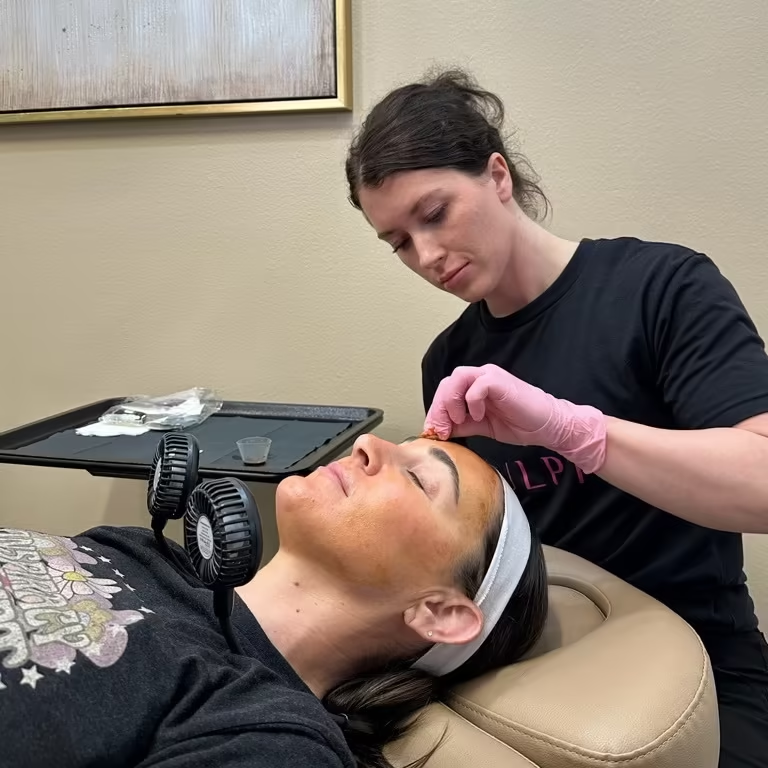
Arizona's bright, sunny climate makes melasma and pigmentation the skin concern we see most. VI Peel Precision Plus in Scottsdale is formulated for exactly that, and it's a thoughtful choice for every skin tone, including where heat-based treatments call for caution.
The VI Peel is a medium-depth chemical peel that blends trichloroacetic acid, retinoic acid, salicylic acid, phenol and vitamin C. Together they work deeper than a superficial peel while staying remarkably comfortable. Most patients feel tingling and warmth for a few minutes, and that's all.
Precision Plus is the version we choose most often for our patients. It adds hydroquinone and kojic acid, which suppress pigment production as well as lifting pigmented cells. For melasma and sun damage, which are so common in the desert sun after thirty-five, that is what helps results last well beyond the first few weeks.
The peel is self-neutralizing. It stays on your skin for four to five hours after your appointment, you rinse it off at home, and peeling begins around day three.
VI Peel is $349 per peel, and most patients benefit from a series of three to six, spaced four weeks apart. At your complimentary consultation we assess your pigment type and depth, recommend the number of peels suited to your skin, and share your series total so you can plan with confidence from the start.
Your series is planned around the depth and type of your pigment. In this climate, most patients enjoy maintenance peels two to three times a year.
Peels care for the surface and the pigment beneath it. Here is what responds, about how many peels it takes, and where another treatment may suit you better.
Symmetrical brown patches on the cheeks, forehead and upper lip, influenced by hormones and deepened by sun. Precision Plus suppresses pigment production as well as lifting it, and melasma is managed over time with care.
Discrete brown spots from cumulative UV exposure. These respond quickly and completely, and often clear substantially within a series of three.
The brown or red marks left after a blemish heals. These are pigment rather than scarring and respond well; for acne scarring, we recommend microneedling.
Overall patchiness and mottling that can make skin look tired, however well you sleep. Often the first improvement patients notice.
Skin that has lost its glow. Cell turnover slows with age and sun exposure; a peel refreshes it, and the change is usually visible after the first.
The salicylic acid component clears follicles and reduces oil. For active inflammatory or cystic acne, we calm the skin medically first, then peel.
Surface lines and rough texture soften as the outer layers renew. For lines caused by movement, a neuromodulator is the better fit.
Areas that show Arizona sun early and often go untreated. They heal more gently than the face, so peels are spaced further apart.
Lines that remain at complete rest call for volume or resurfacing rather than pigment care. We'll guide you to filler, microneedling or a laser referral.
A peel works in two ways: it lifts pigmented cells and it calms the production of new pigment. The second is what helps results last.
Skin is cleansed and degreased, then the peel is applied in successive layers, with assessment between each. Depth is tailored to your skin type and pigment rather than a fixed protocol.
The acid blend loosens the bonds holding dull and pigmented cells at the surface. You'll feel tingling and warmth for three to five minutes, then it settles. The peel is self-neutralizing and stays on after your visit.
In Precision Plus, hydroquinone and kojic acid inhibit tyrosinase, the enzyme that produces melanin. This addresses the source of pigment as well as its appearance, which is why this formulation suits melasma so well.
Peeling starts around day three and finishes by day five to seven. It is a light flaking rather than sheeting, most noticeable around the mouth and nose. Let it shed naturally.
Fresh, evenly toned skin is revealed underneath, and the gentle, controlled renewal encourages collagen production over the following weeks. Each peel in a series builds on the last.
We identify the type of pigment you have (melasma behaves differently from sun spots and post-acne marks), note your Fitzpatrick type, and review your medications and history.
Your skin is thoroughly cleansed and degreased so the solution penetrates evenly, for a smooth, even result.
Applied in successive layers, with assessment between each. You'll feel tingling and warmth for three to five minutes; a small fan keeps you comfortable.
It is self-neutralizing and stays on for four to five hours. You'll leave with a light tint and can go about a quiet evening at home.
You rinse at home that evening and begin your post-peel kit. Before you leave, we walk you through the next seven days, including what to expect on day three.

Individual results vary. All photographs are of KORA patients, unretouched, in identical lighting and framing, shared with written consent.
A VI Peel brings visible peeling from day 3 to day 5, finishing by day 7. Skin feels tight for the first two days before peeling begins. Most patients benefit from a series of 3 to 6 peels spaced 4 weeks apart, with maintenance two to three times a year.
Planning for an event? Schedule your peel at least two weeks ahead. Peeling on days three to five is visible, and you'll want your fresh skin settled before photographs.
Melasma is a chronic condition influenced by hormones and triggered by UV and heat, so it is managed over time rather than cured. A Precision Plus series suppresses pigment production and lifts existing pigment. What keeps it away is daily mineral sun protection, a prescribed home regimen and avoiding the heat exposure that drives it, which takes a little extra care in Arizona. Patients who pair their treatment with consistent protection often keep their results for years. We'll talk through the long-term plan at your consultation, so you know exactly what to expect from the start and feel supported well beyond your final peel.
For pigmentation in deeper skin tones, some resurfacing and IPL devices call for caution because of the risk of post-inflammatory hyperpigmentation. Heat is also a direct melasma trigger, and melasma treated with certain lasers can rebound darker. VI Peel is a chemical rather than thermal treatment and is safe across all Fitzpatrick types. A laser has its place for some concerns, and for melasma and deeper skin tones a peel is frequently the safer first choice. If a laser would suit your skin better, we'll arrange a referral.
Scottsdale sits at a high UV index for much of the year, and the cumulative dose here is substantially higher than in much of the country. It can show up as earlier photodamage, more persistent melasma and pigmentation on the chest, arms and hands. That is why sun protection is so central to your results. Every peel series comes with a home regimen and a mineral SPF plan tailored to you, because in this climate your daily care is half the treatment.
VI Peel comes in several formulations, each with its own purpose. The Original suits younger skin, general dullness and first-time peel patients. Precision Plus adds hydroquinone and kojic acid for melasma, sun damage and persistent pigmentation, and it's the version we use most often. Purify focuses on active congestion and acne. Purify with Precision Plus cares for acne together with the marks it leaves behind, a very common combination. We choose your formulation together at consultation, based on your pigment type and skin condition.
For melasma, a Precision Plus series combined with daily sun protection and a prescribed home regimen is usually the safest effective approach, particularly in deeper skin tones, where heat-based devices call for caution. Microneedling treats texture and scarring rather than pigment. Skincare alone works gradually and is what maintains any result. Lasers are powerful and well suited to some pigment, though for melasma they call for real care.
| Compare | This treatmentVI Peel Precision Plus | Pairs withSkinPen microneedling | Pairs withMedical-grade skincare | AlternativeLaser resurfacing |
|---|---|---|---|---|
| Best for | Melasma, sun damage, uneven tone | Acne scarring, pores, rough texture | Maintaining any result, slow steady improvement | Certain discrete pigment and deeper resurfacing |
| What it does | Removes pigmented cells and suppresses new pigment | Rebuilds collagen through controlled micro-injury | Suppresses pigment daily and protects from UV | Uses heat and light to target pigment or resurface |
| Onset | Result per peel at 2 weeks | Week 2 onward | 8–12 weeks | Varies |
| Typically lasts | Maintained with 2–3 peels a year | Structural and lasting | As long as you use it | Varies |
| Peel | Frequency | Priced | Estimated cost |
|---|---|---|---|
| VI Peel Precision Plus | Per peel | Per peel | $349 |
| Consultation & aftercare kit | — | — | Complimentary |
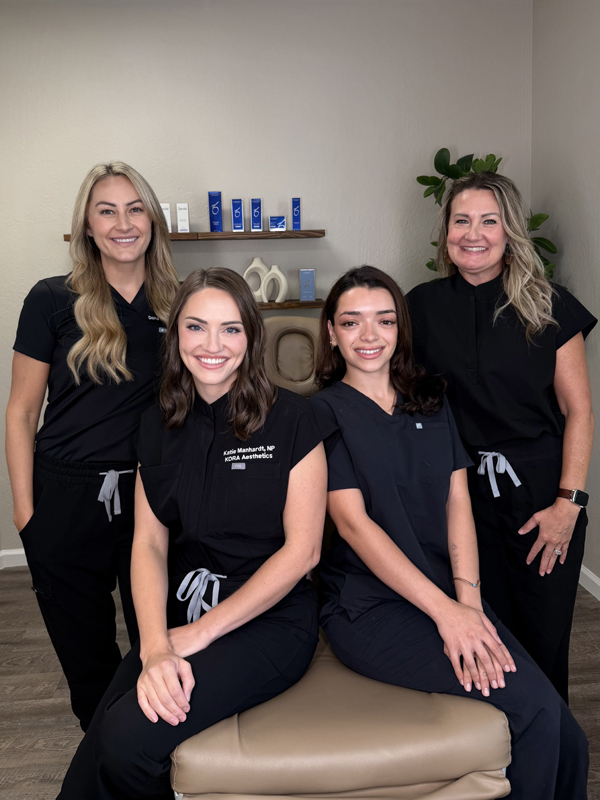
KORA Aesthetics was founded by Katie Manhardt, MSN, FNP-C, a board-certified family nurse practitioner and national clinical trainer. She is joined by Audrey Bakken, NP, a board-certified nurse practitioner with more than 23 years in medicine and over a decade in aesthetics, whose focus includes skin health and microneedling, and by Dana Nichols, NP, whose nine years in the ICU shape her calm, detail-oriented care.
Every chemical peel is performed by one of our board-certified nurse practitioners, beginning with a careful skin assessment and a plan built around your pigment and goals.
Pigment type, Fitzpatrick type, medications and history all guide the formulation and depth. Melasma responds best to a measured, tailored approach.
The formulation with hydroquinone and kojic acid, which suppresses pigment production as well as lifting what is visible. Ideal for the pigment Arizona sun creates.
Katie is the BEST! My skin has never felt or looked better. She is truly an expert in her field and genuinely cares about her clients. Highly recommend all around."
Katie with KORA Aesthetics is amazing! She is so knowledgeable and effortlessly walked me through each step of a very needed skin care regimen. I trust her with all skin and facial needs
So professional, comfortable and natural. Katie is awesome, I will be trusting her with my skin care for life.
Start about one week ahead
The next seven days
The VI Peel is a medium-depth chemical peel blending trichloroacetic acid, retinoic acid, salicylic acid, phenol and vitamin C. It reaches deeper than a superficial peel while staying remarkably comfortable, and it is safe across all skin tones.
For most patients, a course of VI Peel Precision Plus combined with daily mineral sun protection and a prescribed home regimen. Precision Plus contains hydroquinone and kojic acid, which suppress pigment production as well as lifting existing pigment. Melasma is chronic, so it is managed over time rather than cured, and heat-based devices call for caution.
It depends on the pigment. Discrete sun spots often respond well to either. For melasma, heat is a direct trigger and certain lasers can cause it to rebound darker, so a peel is usually the safer first approach. If a laser would suit you better, we'll arrange a referral.
Arizona's high UV means melasma and sun damage can return without ongoing care. Daily mineral SPF, a home regimen and maintenance peels two to three times a year keep your skin clear and even. We'll build that plan with you, tailored to your pigment.
At KORA in Scottsdale, VI Peel Precision Plus is $349 per peel, and the aftercare kit is included. Most patients benefit from a series of three to six, and we share your series total at consultation.
Sun damage and post-acne marks often improve substantially within three to four. Melasma usually needs four to six plus ongoing maintenance. We'll recommend a series at your consultation.
Very little. Expect tingling and warmth for three to five minutes during application, which settles quickly. It is remarkably comfortable for a peel of this depth.
Peeling begins around day three and finishes by day five to seven. It is light flaking rather than sheeting, most noticeable around the mouth and nose. On days one and two your skin will feel tight, with no peeling yet.
Mineral makeup from day two onward is fine, though it may cling to flaking areas. Many patients find generous moisturizer and mineral SPF more comfortable than covering it.
Yes. It is safe across all Fitzpatrick types, including deeper skin tones, where some resurfacing and IPL devices call for caution because of post-inflammatory hyperpigmentation. For melasma in darker skin it is frequently the safer choice.
We'll wait to treat anyone pregnant, trying to conceive or breastfeeding; anyone who has taken isotretinoin within six months; anyone with an aspirin or salicylate allergy, since the peel contains salicylic acid; anyone with an active cold sore or skin infection; and anyone with sunburnt or freshly tanned skin.
Pigment is color; texture is surface. If your concern is brown patches, sun damage or uneven tone, a peel is the right fit. For acne scarring, pore size or rough texture, microneedling is ideal. Many patients combine both, spaced apart.
Frequently. Our clinic is on 69th Street just south of Shea — inside Scottsdale, a few hundred yards from the Paradise Valley boundary, usually a five to ten minute drive from most of PV.
10505 N 69th Street, Suite 1300, Scottsdale, AZ 85253 — at 69th Street just south of Shea Boulevard, with free private parking. We are appointment only.
Our clinic sits at 69th Street just south of Shea — inside Scottsdale, and a few hundred yards from the Paradise Valley town line. Patients travel to us from across the East Valley.
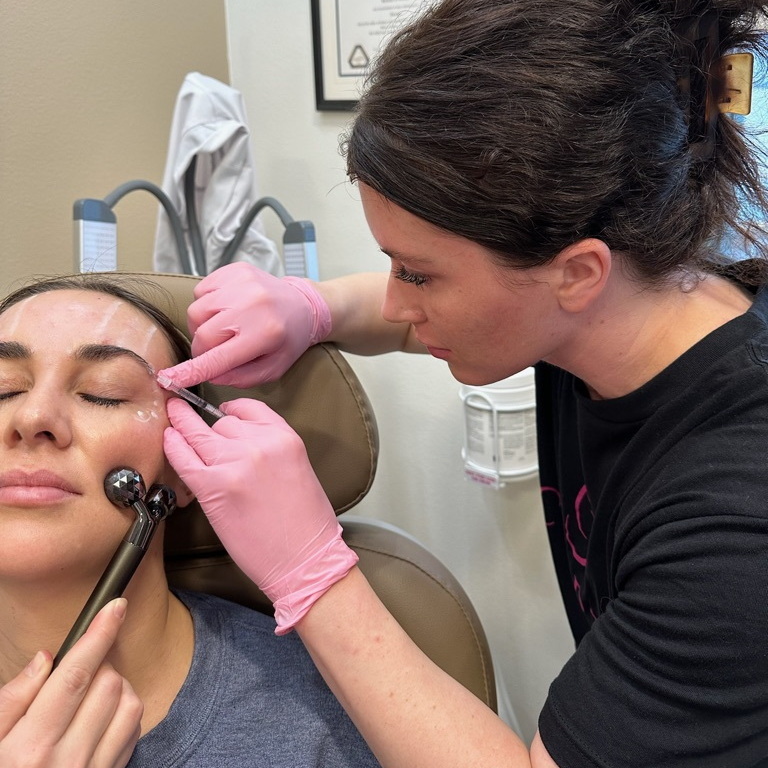
Botox in Scottsdale at KORA Aesthetics — $13.50 per unit, injected by a board-certified nurse practitioner and national clinical trainer. Forehead lines,…
Explore Botox →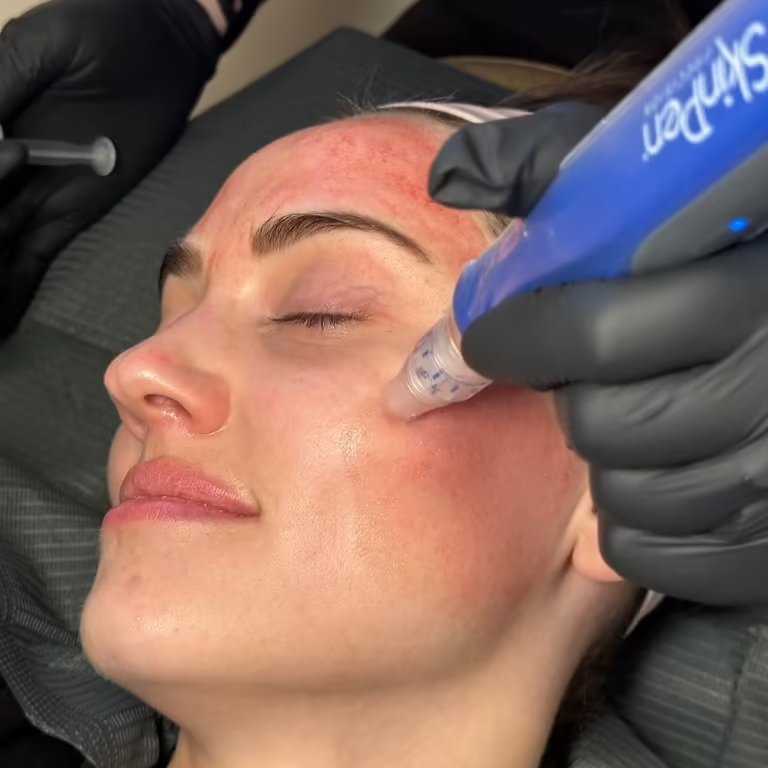
Refines texture, scarring and pores
Explore SkinPen PRF Microneedling →
Medical-grade skincare in Scottsdale at KORA Aesthetics — ZO Skin Health and Skinbetter Science, prescribed to your skin by a nurse practitioner…
Explore Medical Grade Skincare →A thoughtful pigment assessment, the right peel formulation for your skin, a series planned around your goals, and the home regimen that keeps your results through an Arizona summer.
It's light flaking on days three to five, most noticeable around the mouth and nose. Treat on a Wednesday or Thursday and you'll be past the most visible stage by the weekend.
A laser can suit some pigment, though heat is a direct melasma trigger and certain lasers can cause it to rebound darker. We'll assess your pigment type and recommend the approach that best suits your skin.
Lasting results come from pairing peels with protection. Pigment returns quickly in this climate without daily mineral SPF and a home regimen. Bring your current routine and we'll tailor a plan around it.
VI Peel is safe across all Fitzpatrick types, making it a thoughtful, effective pigment treatment for deeper skin tones, with no heat involved.
KORA Aesthetics
We firmly believe that the internet should be available and accessible to anyone, and are committed to providing a website that is accessible to the widest possible audience, regardless of circumstance and ability.
To fulfill this, we aim to adhere as strictly as possible to the World Wide Web Consortium’s (W3C) Web Content Accessibility Guidelines 2.1 (WCAG 2.1) at the AA level. These guidelines explain how to make web content accessible to people with a wide array of disabilities. Complying with those guidelines helps us ensure that the website is accessible to all people: blind people, people with motor impairments, visual impairment, cognitive disabilities, and more.
This website utilizes various technologies that are meant to make it as accessible as possible at all times. We utilize an accessibility interface that allows persons with specific disabilities to adjust the website’s UI (user interface) and design it to their personal needs.
Additionally, the website utilizes an AI-based application that runs in the background and optimizes its accessibility level constantly. This application remediates the website’s HTML, adapts Its functionality and behavior for screen-readers used by the blind users, and for keyboard functions used by individuals with motor impairments.
If you’ve found a malfunction or have ideas for improvement, we’ll be happy to hear from you. You can reach out to the website’s operators by using the following email
Our website implements the ARIA attributes (Accessible Rich Internet Applications) technique, alongside various different behavioral changes, to ensure blind users visiting with screen-readers are able to read, comprehend, and enjoy the website’s functions. As soon as a user with a screen-reader enters your site, they immediately receive a prompt to enter the Screen-Reader Profile so they can browse and operate your site effectively. Here’s how our website covers some of the most important screen-reader requirements, alongside console screenshots of code examples:
Screen-reader optimization: we run a background process that learns the website’s components from top to bottom, to ensure ongoing compliance even when updating the website. In this process, we provide screen-readers with meaningful data using the ARIA set of attributes. For example, we provide accurate form labels; descriptions for actionable icons (social media icons, search icons, cart icons, etc.); validation guidance for form inputs; element roles such as buttons, menus, modal dialogues (popups), and others. Additionally, the background process scans all the website’s images and provides an accurate and meaningful image-object-recognition-based description as an ALT (alternate text) tag for images that are not described. It will also extract texts that are embedded within the image, using an OCR (optical character recognition) technology. To turn on screen-reader adjustments at any time, users need only to press the Alt+1 keyboard combination. Screen-reader users also get automatic announcements to turn the Screen-reader mode on as soon as they enter the website.
These adjustments are compatible with all popular screen readers, including JAWS and NVDA.
Keyboard navigation optimization: The background process also adjusts the website’s HTML, and adds various behaviors using JavaScript code to make the website operable by the keyboard. This includes the ability to navigate the website using the Tab and Shift+Tab keys, operate dropdowns with the arrow keys, close them with Esc, trigger buttons and links using the Enter key, navigate between radio and checkbox elements using the arrow keys, and fill them in with the Spacebar or Enter key.Additionally, keyboard users will find quick-navigation and content-skip menus, available at any time by clicking Alt+1, or as the first elements of the site while navigating with the keyboard. The background process also handles triggered popups by moving the keyboard focus towards them as soon as they appear, and not allow the focus drift outside it.
Users can also use shortcuts such as “M” (menus), “H” (headings), “F” (forms), “B” (buttons), and “G” (graphics) to jump to specific elements.
We aim to support the widest array of browsers and assistive technologies as possible, so our users can choose the best fitting tools for them, with as few limitations as possible. Therefore, we have worked very hard to be able to support all major systems that comprise over 95% of the user market share including Google Chrome, Mozilla Firefox, Apple Safari, Opera and Microsoft Edge, JAWS and NVDA (screen readers).
Despite our very best efforts to allow anybody to adjust the website to their needs. There may still be pages or sections that are not fully accessible, are in the process of becoming accessible, or are lacking an adequate technological solution to make them accessible. Still, we are continually improving our accessibility, adding, updating and improving its options and features, and developing and adopting new technologies. All this is meant to reach the optimal level of accessibility, following technological advancements. For any assistance, please reach out to