
Why this area behaves differently from crow’s feet
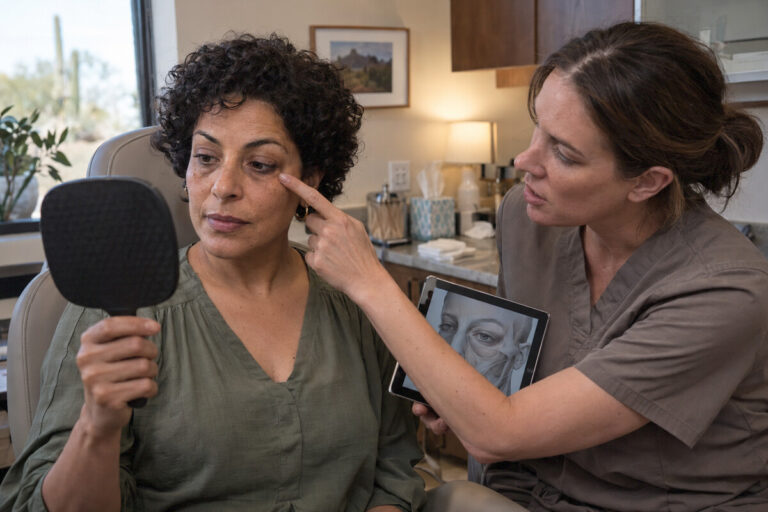
Crow’s feet respond well to Botox because they are largely caused by repeated muscle movement – smiling, squinting. Fine lines directly under the eye are usually a different kind of problem: thin, sun-exposed skin gradually losing structure and texture over time, rather than a muscle folding the skin with each expression.
That distinction matters, because Botox treats movement. It does not improve skin texture, thickness, or quality – so for lines that are mostly a skin issue rather than a movement issue, it is usually not the right first tool.
A quick way to tell which you’re dealing with
Smile, then relax your face completely. If the lines are clearly tied to the smiling motion and soften significantly at rest, that is more consistent with crow’s feet extending downward, which does respond to Botox. If fine lines or crepey texture are present even with your face fully relaxed, that points toward a skin-quality issue instead.
Worth knowing: this area also carries more risk than most if a neuromodulator is used incorrectly here – the muscle involved supports the lower eyelid, and over-treatment can affect how well the eye closes or even make under-eye puffiness more noticeable. This is part of why it is not the default approach for this specific concern.
What actually helps for skin-quality lines here
- PRF. Made from your own blood with nothing synthetic, this is generally the better-suited option for this delicate area compared with dermal filler, and works on skin quality directly rather than muscle movement.
- Consistent retinoid use and medical-grade skincare. A genuinely useful long-term approach for texture and fine lines, even though it works gradually rather than immediately.
- Daily sun protection specifically on this area. The skin here is thinner and shows UV damage earlier than most of the face.
Questions people ask
Can Botox fix lines under my eyes?
Usually not as a first approach. Fine lines directly under the eye are typically a skin-quality issue rather than a movement issue, so Botox – which treats muscle movement, not skin texture – is generally not the right tool.
Why do I have lines under my eyes if I don’t have crow’s feet?
These can be separate issues. Crow’s feet come from movement; fine lines directly under the eye are more often related to thin, sun-exposed skin losing structure over time.
What actually helps with under-eye texture?
PRF, consistent retinoid use, and daily sun protection are the more effective approaches for skin-quality concerns in this area.
Is Botox risky for this area?
It carries more risk than most facial areas if used incorrectly, since the muscle involved supports the lower eyelid. This is part of why it is not the default treatment for this specific concern.
Want an honest read on what would actually help?
A nurse practitioner-led practice in Scottsdale, Arizona.