What “jelly roll” actually refers to
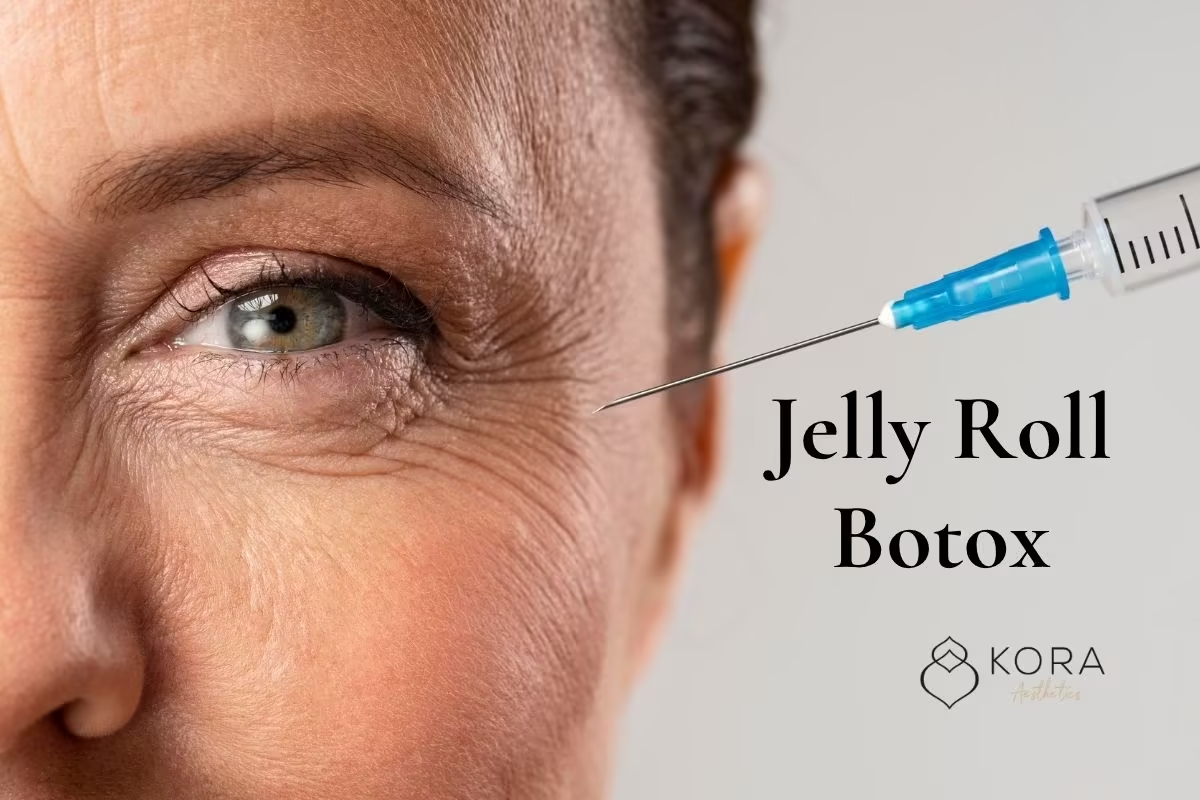
This is a specific, muscle-related bulge that appears just below the lower lash line when smiling – caused by a strong or prominent pretarsal orbicularis oculi, the muscle that closes the eyelid. It is not the same thing as under-eye bags, and telling the two apart matters, because they need completely different treatment.
Why this is not the same as under-eye bags
True under-eye bags come from fat pads that have become more prominent, often with age, and are typically visible whether or not you are smiling. Jelly roll is different: it is a muscle bulge specifically triggered by the smiling motion, largely disappearing when your face is at rest. If what you are seeing is only there when you smile, that is a strong sign it is muscle-related rather than fat-related.
This distinction is not cosmetic trivia – a neuromodulator can genuinely help with the muscle bulge, but has no effect on true fat pad prominence, which needs a different approach entirely, whether that is filler for volume loss elsewhere in the under-eye area or a surgical conversation for significant fat herniation.
This area needs an especially light touch. The muscle involved also plays a role in closing your eyelid fully. Overtreatment here carries a real risk of affecting how well your eye closes, which can lead to dryness or irritation. A very small, precise dose is standard for this area, and it is one of the more technique-sensitive treatments on the face.
Are you actually a candidate?
The clearest sign is a bulge that appears specifically when you smile and largely resolves when your face is relaxed. If you see prominence in the under-eye area regardless of expression, that points toward fat pads or volume loss rather than muscle, and a neuromodulator is not the right tool for that.
For volume-related under-eye concerns, PRF is often a better-suited option than filler in this particular area, given how delicate the tissue is here.
Questions people ask
Can Botox fix under-eye bags?
Not if they are caused by fat pad prominence. It can help with a muscle-related bulge that specifically appears when smiling, known as jelly roll – but that is a different cause from true under-eye bags.
How do I know if I have jelly roll or actual bags?
If the bulge only appears when you smile and mostly disappears at rest, that points to muscle. If it is present regardless of expression, that points to fat pads, which need a different treatment.
Is this a risky area to treat?
It needs more precision than most areas, since the muscle also closes the eyelid. A conservative, small dose is standard practice here for that reason.
What if I have both a muscle bulge and true bags?
This is common, and an in-person assessment is the way to figure out how much each is contributing, so treatment addresses the actual cause rather than guessing.
Not sure if it’s muscle or volume?
A nurse practitioner-led practice in Scottsdale, Arizona.