6 min readUpdated
Lip Shapes: Types, Proportions and How Filler Is Planned
The common lip shapes, what research says about upper and lower lip proportions, how lips change with age, and how lip filler or a lip flip is planned around your shape.

If you only read one thing
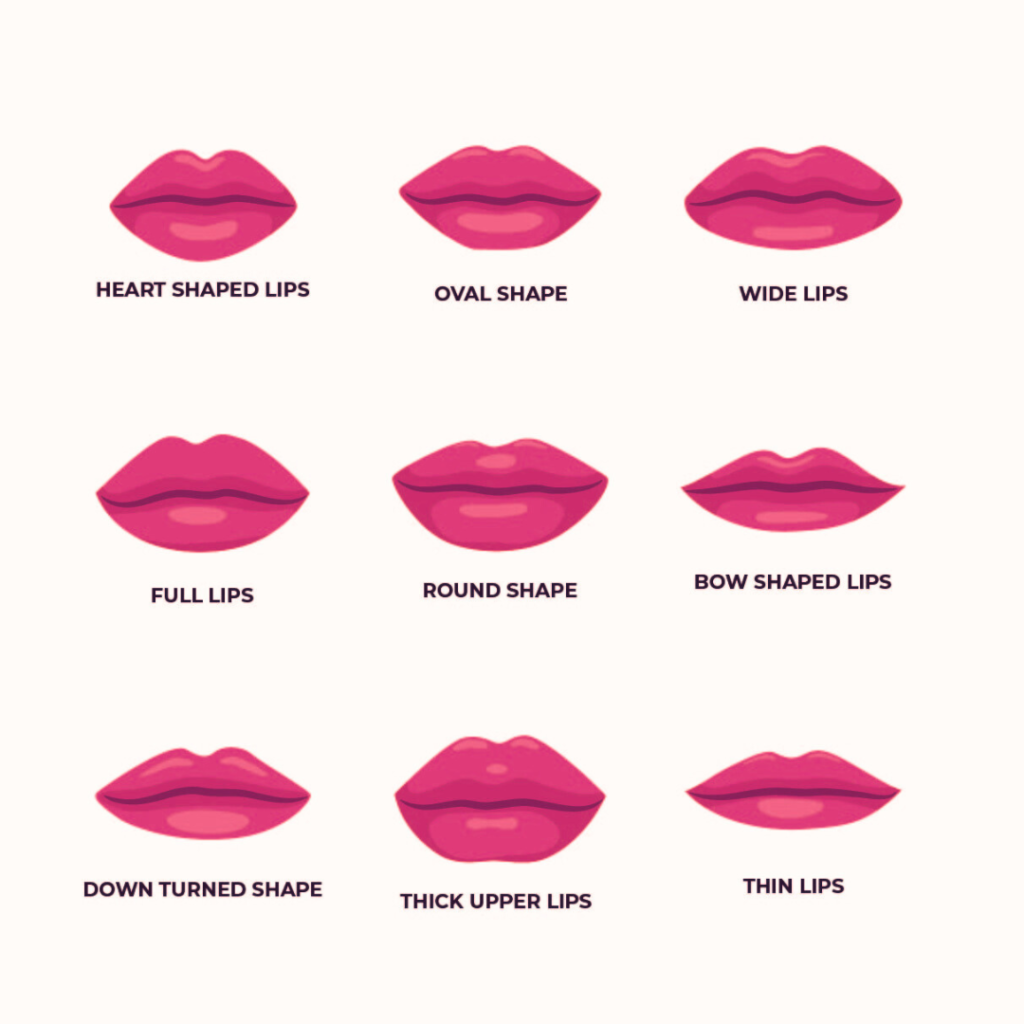
Common lip shapes include full, thin, heart-shaped, round, top-heavy, a defined or flat Cupid's bow, downturned corners and asymmetrical lips, and most people combine several. Research suggests a lower lip about one and a half to two times the upper looks balanced in many faces, closer to equal in others. A good lip plan works with your own shape and proportions rather than copying a trend.
- Most lips combine several shapes; fullness, upper-to-lower balance, Cupid's bow and corner angle are the most useful ways to describe them.
- A commonly cited upper-to-lower ratio is about 1 : 1.6 in white patients and closer to 1 : 1 in Asian patients.
- In a 2017 study, about 72% of raters ranked a top-heavy 2 : 1 lip as least attractive.
- With age, lips lose definition and the upper lip lengthens and rolls in, so mature lips need shape more than volume.
- Lip filler at KORA: Starting at $650+.
On this page 6 sections
Lip shapes vary far more than beauty trends suggest, and knowing yours is the first step in planning any lip treatment. In this guide I explain the common lip shapes, what research says about lip proportions, how lips change with age, and how lip filler or a lip flip should be matched to the shape you already have.
The common lip shapes
There is no official medical list of lip shapes, but most lips can be described by their fullness, the balance between upper and lower lip, the shape of the Cupid’s bow and the angle of the corners. A 2020 three-dimensional study in Heliyon (Nasir, Popat and Richmond) scored 80 adults on eight resting lip traits, including Cupid’s bow shape (flat, U-shaped or sharp V) and lip fullness, and found those traits highly variable from person to person. Most people’s lips combine several of the shapes below.
| Lip shape | What it looks like | What usually helps, if anything |
|---|---|---|
| Full | Both lips have good volume and a clear border | Often nothing; sometimes hydration or a little definition |
| Thin | Little visible pink, especially in the upper lip | Small amounts of filler built gradually; a lip flip if the upper lip rolls in |
| Defined Cupid’s bow | A sharp double curve at the center of the upper lip | Precise filler along the border to keep the peaks crisp |
| Flat Cupid’s bow | A soft or barely visible curve | Filler to define the border and the philtral columns above it |
| Heart-shaped | Fuller lower lip with a narrower, peaked upper lip | Filler in the center of the upper lip to balance proportions |
| Round | Fullness concentrated in the center, with soft curves | Filler placed toward the sides to lengthen the shape |
| Top-heavy | Upper lip as full as, or fuller than, the lower lip | Usually volume in the lower lip rather than the upper |
| Downturned corners | Corners slope down, giving a tired or sad look at rest | Filler to support the corners; sometimes Botox to the muscle that pulls them down |
| Asymmetrical | One side fuller or shaped differently | Different amounts on each side; small differences are normal |
A few of these deserve more detail. Downturned corners come from the depressor anguli oris (DAO) muscle as much as from volume loss; Botox for this is an off-label use, and I cover it in my post on DAO muscle Botox. If your upper lip seems to disappear when you smile, the shape may be fine and the lip simply rolls inward, which a lip flip addresses.
What research says about lip proportions
Studies agree that balance between the upper and lower lip matters more than size, but the “ideal” ratio depends on the face and on who is judging.
A lower lip about one and a half to two times the upper
A 2026 review of lip filler techniques by Sharad and Singh gives an upper-to-lower lip ratio of about 1 : 1.6 in white patients and about 1 : 1 in Asian patients, and notes that the upper lip usually projects 1 to 2 mm further than the lower lip in profile. In a 2017 study in JAMA Facial Plastic Surgery, Popenko and colleagues asked 428 people to rank digitally altered faces. A ratio of 1 : 2 was ranked most attractive, and a top-heavy 2 : 1 ratio was ranked least attractive by about 72% of raters. The study used images of white women aged 18 to 25 only, and the authors note the results may not apply to other groups.
Preferences differ around the world
A 2017 survey by Heidekrueger and colleagues, with 1,011 responses from plastic surgeons and members of the public in 35 countries, found that surgeons practicing in Asia preferred larger lips, surgeons in Europe preferred smaller lips, and members of the public living in Asia preferred the smallest. There is no single right answer.
Overfilled lips are rated less attractive
A 2025 study in Plastic and Reconstructive Surgery Global Open by Atiyeh and colleagues showed 200 adults images with different lip volumes and ratios. Upper lips taller than about 30% of half the lip width were consistently rated unattractive, and upper lips larger than lower lips were rated less attractive, especially when also very full. Frequent social media users rated overinflated lips as unattractive too.
How lip shape changes with age
Lips lose shape before they lose size, and that changes what treatment makes sense. The Sharad and Singh review describes the typical changes: the philtral columns flatten, the Cupid’s bow loses definition, the border blurs, the upper lip lengthens so less pink shows, and the upper lip starts to roll inward. For a mature lip, the review advises a conservative approach, with small amounts along the border to restore definition rather than volume. The same review suggests about 0.5 mL per session, spaced 4 to 8 weeks apart, for thin or older lips.
Lines above the upper lip are a separate concern, and they often respond better to a softer, hydrating filler than to volume. My post on tight lip tissue and lip filler covers lips that resist volume.
How lip treatment is planned around your shape
At KORA, every lip plan starts from your natural shape, not a template.
- Assessment. Expect your lips to be looked at at rest, smiling and in profile, with symmetry checked and questions about any previous filler.
- The right treatment. Some lips need volume, some need definition or hydration, and some need a lip flip rather than filler.
- Product choice. We use FDA-approved hyaluronic acid fillers, chosen for your lip shape. The review recommends a firmer gel for volume and a softer one for hydration and fine lines.
- Micro-droplet technique. We use a micro-droplet technique, placing filler in small amounts to build shape gradually and keep the border defined.
- Two-week review. First-time lip filler patients come back at two weeks, at no charge, once the swelling has settled.
If your lips have been filled before and the shape has drifted, read my post on lip filler migration before planning more.
What lip treatments cost at KORA
Lip filler is priced by treatment, and a lip flip is a flat fee.
Lip filler
Lip PlumpStarting at $650+
Lip HydrateStarting at $650+
Lip flip
Flat fee$100 Flat Fee
Consultation
Assessment and planComplimentary
Prices come from our current price list. Your plan and total are confirmed at a complimentary consultation before anything begins.
Learn more about lip filler and the lip flip at our clinic on the Scottsdale and Paradise Valley border.
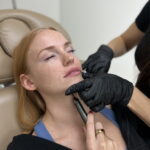 Lip FillersLip filler in Scottsdale at KORA Aesthetics — from $650 a syringe, placed by a national clinical trainer for Galderma and Prollenium. Structure and definition rather than volume for its own sake. See lip filler cost, how much swelling to expect day by day, how long it lasts, and when one syringe is too much.See treatment, prices and results
Frequently asked questions
What are the main lip shapes?
Full, thin, heart-shaped, round, top-heavy, a defined or flat Cupid's bow, downturned corners and asymmetrical lips. Most people have a mix of these.
What is the ideal lip ratio?
Studies in white faces favor a lower lip about 1.6 to 2 times the upper. Ratios closer to 1 : 1 are common and attractive in many faces, including many Asian faces.
Can lip filler change my lip shape?
Filler can add volume, define the border and Cupid's bow, and balance upper and lower lips. It works within your natural shape rather than replacing it.
Is it normal for lips to be asymmetrical?
Yes. Small differences between the two sides are normal. Filler can even them out by using different amounts on each side.
What is the rarest lip shape?
There is no reliable data on how common each lip shape is. Research shows lip traits vary widely from person to person.
How do I find out my lip shape?
Look at your lips without makeup, at rest and smiling, in good light. Note which lip is fuller, the shape of your Cupid's bow and the angle of your corners, or ask at a consultation.
How much does lip filler cost in Scottsdale?
Lip filler at KORA Aesthetics: Starting at $650+. A lip flip: $100 Flat Fee. The consultation is complimentary.
Sources
- Popenko NA, Tripathi PB, Devcic Z, et al. A quantitative approach to determining the ideal female lip aesthetic and its effect on facial attractiveness. JAMA Facial Plastic Surgery, 2017
- Heidekrueger P, Juran S, Ehrl D, Broer PN. The current preferred female lip ratio (conference abstract). German Medical Science, DGPRAEC 2017
- Atiyeh BS, et al. Lip augmentation with soft tissue fillers: social media, perceptual adaptation, and shifting beauty trends. Plastic and Reconstructive Surgery Global Open, 2025 (summary in PsyPost)
- Nasir SH, Popat H, Richmond S. The effect of resting morphological lip shape during lip movement: a three-dimensional motion analysis study. Heliyon, 2020
- Sharad J, Singh S. A comprehensive narrative review on lip filler techniques with practical tips for optimum outcomes. Journal of Cutaneous and Aesthetic Surgery, 2026
Katie Manhardt
Board-certified family nurse practitioner and founder of KORA Aesthetics in Scottsdale. Katie is a national clinical trainer for Galderma and Prollenium — selected to teach injection technique and facial anatomy to other medical professionals. Every treatment at KORA is performed by Katie or by one…