6 min readUpdated
Chemical Peel vs Microneedling: How to Choose
A chemical peel works on color from the surface down; microneedling rebuilds texture from within. How to choose, what the research shows, and when to do both.

If you only read one thing
Choose a chemical peel if your main concern is color: brown spots, sun damage, acne marks or dullness. Choose microneedling if your main concern is texture: depressed acne scars, pores or fine lines. In a 2022 trial, microneedling improved acne scars in 73% of patients versus 33% for a glycolic peel. Peels carry a higher risk of dark patches in darker skin. Some people benefit from both, done on separate days as part of one plan.
- Peels work from the surface down and suit pigment, sun damage and acne marks.
- Microneedling builds collagen from within and suits depressed acne scars, texture and fine lines.
- In a 2022 randomized trial, microneedling improved acne scars in 73.3% of patients vs 33.3% with a 35% glycolic peel.
- SkinPen was FDA-cleared in 2018 for facial acne scars in adults 22 and older.
- Darker skin types need more preparation before a peel because of a higher risk of post-peel dark patches.
- VI Peel at KORA: $349. Microneedling: $350.
On this page 7 sections
A chemical peel and microneedling improve the skin in different ways, so the right choice depends on whether your main concern is color or texture. In this guide on chemical peel vs microneedling, I compare how each one works, what the research shows for pigment and acne scars, the downtime, how skin tone changes the choice, and when it makes sense to combine them.
Two treatments that work in different ways
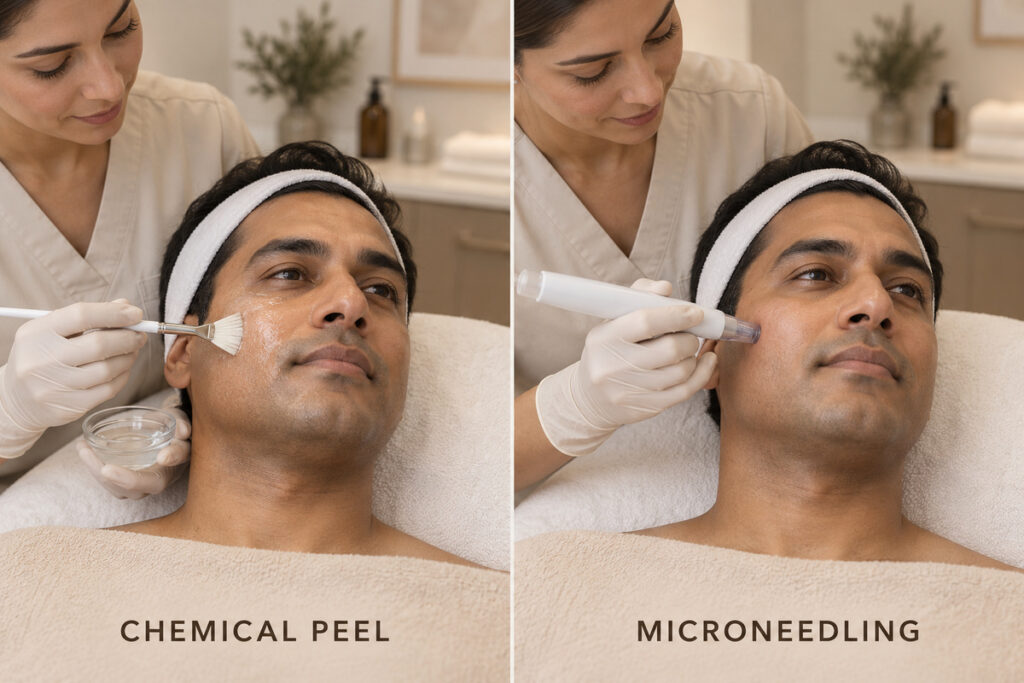
A peel works from the surface down, while microneedling works from inside the skin. A chemical peel uses an acid solution to loosen and remove the outer, damaged layers, so that newer, more even skin replaces them. That makes it strongest on things that sit near the surface: brown spots, sun damage, dullness and rough texture.
Microneedling uses a pen with very fine needles to make tiny channels in the skin. The skin repairs those channels by laying down new collagen, which gradually thickens and smooths it. The American Academy of Dermatology notes that it “usually takes several months before you see full results,” because collagen builds slowly. That makes it strongest on depressed acne scars, enlarged pores and fine lines from collagen loss.
| Chemical peel (VI Peel) | Microneedling (SkinPen) | |
|---|---|---|
| Main strength | Pigment, sun damage, acne marks, dullness | Acne scars, texture, pores, fine lines |
| How it works | Removes damaged outer layers | Stimulates new collagen from within |
| Visible downtime | Peeling from about day 3 for 3 to 4 days | Redness or darkening for a few days to a week |
| Typical course | 3 to 6 peels, 4 to 6 weeks apart (manufacturer) | 3 to 5 sessions, 2 to 4 weeks apart (AAD) |
| When results show | About a week after each peel | Gradually, over several months |
For pigment and sun damage, a peel is usually the first choice
A peel acts on pigment directly, so it is the starting point I recommend for brown spots, sun damage and the flat dark marks acne leaves behind. The peel we offer, VI Peel Precision Plus, is designed by its manufacturer to target pigmentation, including sun damage, melasma and post-inflammatory hyperpigmentation.
Microneedling is not useless for pigment. The AAD lists dark spots and melasma among the concerns dermatologists use it for. But it reaches pigment indirectly, and with melasma I am cautious about anything that inflames the skin, because melasma can darken after irritation. For a patient whose main complaint is uneven color, a series of peels with strict daily sunscreen is the more direct plan.
For acne scars and texture, microneedling usually does more
For depressed acne scars, the research favors microneedling. In a 2022 randomized trial in the Journal of Clinical and Aesthetic Dermatology, Ishfaq and colleagues treated 60 patients with Fitzpatrick skin types IV to VI with either microneedling or a 35 percent glycolic acid peel, six sessions two weeks apart. Two weeks after the last session, 73.3 percent of the microneedling group had improved by more than one scar grade, compared with 33.3 percent of the peel group. The trial had no untreated control group, and it tested one type of peel, so it does not tell us how every peel compares.
A 2020 study of an automated microneedling device in the same journal (von Dalwig-Nolda and Ablon, 47 patients, skin types I to IV) found that 85.1 percent had some reduction in acne scarring three months after four sessions, with rolling scars improving most and no serious side effects. The SkinPen device we use at KORA was the first microneedling device cleared by the FDA for this purpose, in 2018, to “improve the appearance of facial acne scars in adults aged 22 years or older.” I explain which scar shapes respond in which acne scars respond to microneedling.
Downtime and skin tone
Both treatments have a few days of visible recovery, and they look different. After microneedling, the AAD says you may see redness on lighter skin or darker shades on darker skin, which usually fade “in a few days to a week,” and you should wait 24 hours before makeup. Our day-by-day guide is in microneedling aftercare. After a VI Peel, the manufacturer says peeling usually starts around day three and lasts three to four days, which I cover in chemical peel aftercare.
Skin tone matters for both, and more for peels. A 2018 review by Castillo and Keri in Clinical, Cosmetic and Investigational Dermatology notes that skin types IV to VI are at higher risk of dark patches after a peel and recommends careful preparation, including sunscreen for two to three months beforehand. The AAD describes microneedling as safe for all skin tones, while noting that studies in darker skin are still small. For medium and darker skin, I recommend planning either treatment conservatively, with more preparation and a longer gap between sessions.
Can you do both?
Yes, and for many people the two work well as parts of one plan: peels for tone and surface, microneedling for texture and structure. They are not usually scheduled on the same day. The skin needs to heal fully from one before the next, and the order depends on what bothers you most. A patient with acne marks and rolling scars, for example, might start with microneedling sessions and add peels for the remaining pigment, while a patient with sun damage and fine lines might do the reverse. We will confirm the order and spacing at your consultation.
What each costs at KORA
VI Peel Precision Plus
Per peel$349
SkinPen microneedling
Per session$350
With PRF$450
Consultation
Skin assessment and planComplimentary
Prices come from our current price list. Your plan and total are confirmed at a complimentary consultation before anything begins.
Learn more about the VI Peel and SkinPen PRF microneedling at our clinic on the Scottsdale and Paradise Valley border.
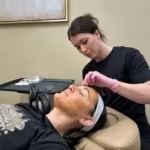 VI Chemical PeelVI Peel Precision Plus in Scottsdale at KORA Aesthetics — $349 a peel, applied by a nurse practitioner and formulated for melasma, sun damage and uneven tone. Safe on darker skin tones, and built for an Arizona UV load. See chemical peel cost, the day-by-day peeling timeline, and how many you need.See treatment, prices and results
Frequently asked questions
Is a chemical peel or microneedling better for acne scars?
Microneedling, for depressed scars. In a 2022 randomized trial it improved scars by more than one grade in 73.3% of patients, compared with 33.3% for a glycolic acid peel. A peel helps more with flat dark marks.
Which is better for melasma or sun spots?
A peel designed for pigment is usually the more direct choice. Microneedling can help some pigment, but melasma can darken after irritation, so it needs a cautious plan.
Can I do a chemical peel and microneedling together?
Yes, as parts of one plan, but not on the same day. The skin should heal fully from one before the next, and the order depends on your main concern.
Which has more downtime, a peel or microneedling?
After microneedling, redness usually fades in a few days to a week. After a VI Peel, visible peeling usually starts around day three and lasts three to four days.
Is microneedling safe for dark skin?
The AAD describes microneedling as safe for all skin tones, and the 2022 acne scar trial was done in skin types IV to VI. Darker skin can still darken temporarily after treatment.
How much do a VI Peel and microneedling cost in Scottsdale?
At KORA Aesthetics, VI Peel Precision Plus is $349 and SkinPen microneedling is $350, or $450 with PRF. The consultation is complimentary.
Sources
- Ishfaq F, Shah R, Sharif S, Waqas N, Jamgochian M, Rao B. A Comparison of Microneedling versus Glycolic Acid Chemical Peel for the Treatment of Acne Scarring. Journal of Clinical and Aesthetic Dermatology, 2022;15(6):48-52
- von Dalwig-Nolda DF, Ablon G. Safety and Effectiveness of an Automated Microneedling Device in Improving Acne Scarring. Journal of Clinical and Aesthetic Dermatology, 2020;13(8):17-22
- American Academy of Dermatology. Microneedling can fade scars, uneven skin tone, and more. AAD.org, accessed 2026
- American Academy of Dermatology. Chemical peels: FAQs. AAD.org, accessed 2026
- Castillo DE, Keri JE. Chemical peels in the treatment of acne: patient selection and perspectives. Clinical, Cosmetic and Investigational Dermatology, 2018;11:365-372
- The Aesthetic Guide. Microneedling system receives FDA De Novo clearance (SkinPen), 2018
Katie Manhardt
Board-certified family nurse practitioner and founder of KORA Aesthetics in Scottsdale. Katie is a national clinical trainer for Galderma and Prollenium — selected to teach injection technique and facial anatomy to other medical professionals. Every treatment at KORA is performed by Katie or by one…