What causes the dimpled, “orange peel” texture
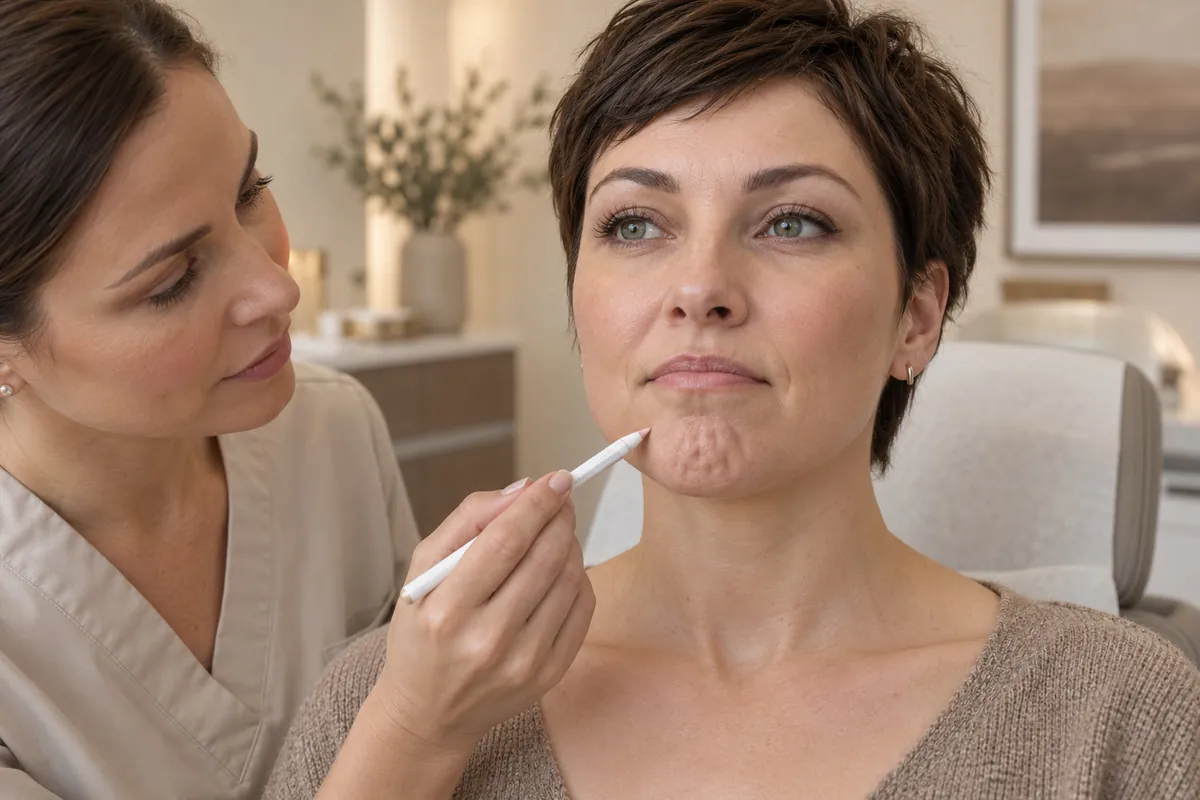
The mentalis is a small muscle at the point of the chin. When it is overactive, the chin can develop a dimpled, pebbly texture – often described as looking like orange peel – that becomes more noticeable when talking, puckering the lips, or expressing certain emotions. For some people it is visible even at rest.
How Botox helps
A small, precise dose relaxes the mentalis, which smooths the dimpled texture by reducing the muscle’s pull on the skin above it. This is a well-established, straightforward treatment for chin dimpling that is genuinely driven by muscle activity.
Worth knowing: this is an off-label use, in the same category as masseter or platysmal band treatment – well-established in practice, not a formally approved indication for this specific purpose. The chin also plays a role in speech and lip movement, so a conservative, precise dose matters here more than in some other areas.
Is your dimpling likely to respond well?
Dimpling that becomes noticeably worse when talking, puckering, or making certain expressions – and improves when the chin is fully relaxed – is the clearest sign this is muscle-driven and likely to respond well. If the texture looks essentially the same regardless of movement, that may reflect more of a skin-texture change with age, which a neuromodulator addresses less directly.
Duration
Similar to other treated areas, results typically last around 3 to 4 months, following the same general timeline as elsewhere.
Questions people ask
What causes orange peel chin?
An overactive mentalis muscle, which creates a dimpled texture that is often more noticeable when talking or puckering the lips.
Does Botox for chin dimpling affect speech?
With a conservative, precise dose, it should not. This is part of why this area needs careful dosing, since the mentalis does play a role in lip and chin movement during speech.
How long does chin dimpling treatment last?
Typically 3 to 4 months, similar to other treated areas.
Will this work for all chin dimpling?
It works best for dimpling that is clearly tied to muscle movement. Texture that looks the same regardless of expression may be more skin-related, which responds less directly to this approach.
Noticing dimpling when you talk or purse your lips?
A nurse practitioner-led practice in Scottsdale, Arizona.