7 min readUpdated
Botox Timeline: When It Kicks In, When It Peaks, How Long It Lasts
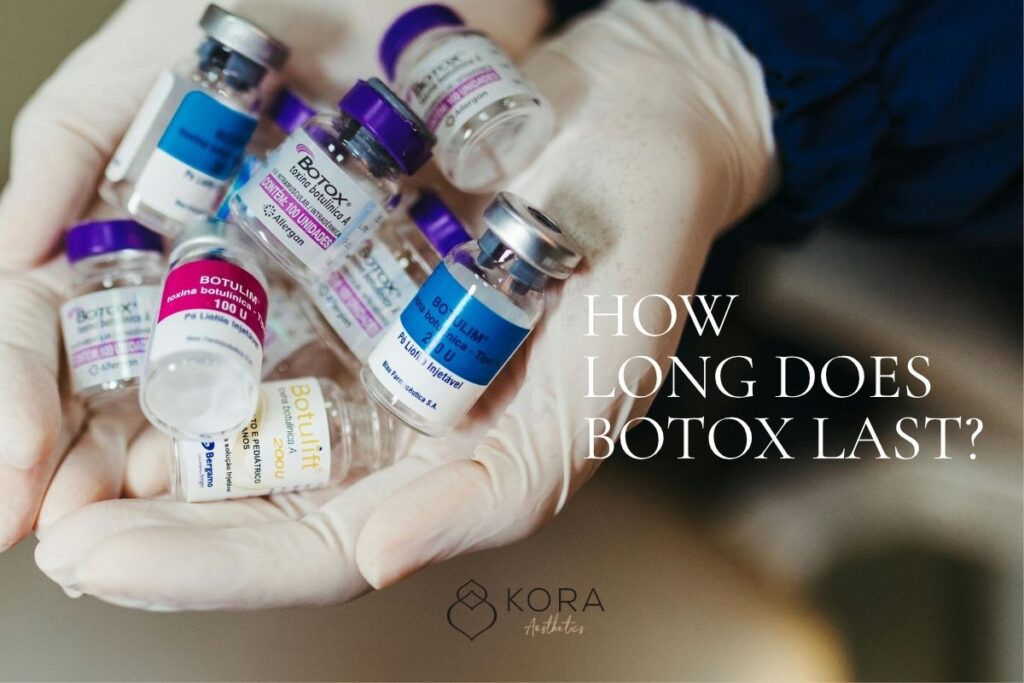
Botox starts working within days, is clearly smoother by day 7 and usually lasts three to four months. The full timeline, with the numbers from the FDA label and studies.

If you only read one thing
Botox usually lasts three to four months. It starts working 1 to 2 days after treatment according to the FDA label, looks clearly smoother by day 7, and reaches its full effect by two to four weeks. Movement then returns gradually. In the label trials, 80% of patients were responders at day 30, 48% at day 90 and 25% at day 120. Stronger muscles, men, and under-dosed treatments tend to wear off sooner.
- The FDA label says Botox starts working 1 to 2 days after injection and builds over the first week.
- In the frown line trials, 74% of patients were responders at day 7 and 80% at day 30.
- The labeled duration for frown lines is about three to four months, and it fades gradually rather than all at once.
- Judge the result at day 14, when uneven early results have usually settled.
- Full treatments are usually spaced at least three months apart, the interval the label was studied at.
- Botox at KORA: $13.50 / unit.
On this page 7 sections
How long does Botox last, and why does it take days to work? In this guide I walk through the Botox timeline from the first softening a few days after treatment to the point, usually three to four months later, when movement returns. I use the FDA label and published studies for the numbers, and explain how to time follow-ups and repeat treatments.
The Botox timeline, day by day
Botox works in stages: it starts within a few days, is mostly in place by the end of the first week, and reaches its full effect over the following weeks. The clearest numbers come from the frown line (glabellar) trials in the Botox Cosmetic prescribing information, where investigators rated how many patients had a clear improvement at each visit.
| When | What you are likely to notice | What the trials found |
|---|---|---|
| Day 0 | Small marks at the injection points; no change in movement yet | The toxin has been placed but has not acted |
| Days 1 to 5 | The first softening when you frown or raise your brows | The label says the effect starts 1 to 2 days after injection |
| Day 7 | Clearly smoother, sometimes a little uneven | 74% of patients were responders |
| Day 14 | The settled result for most people | The point to judge the treatment |
| Day 30 | Full effect | 80% were responders, the highest rate |
| Day 90 | Some movement returning | 48% still met the responder standard |
| Day 120 | Most movement back | 25% still met it |
Those responder figures use a strict standard (the line had to improve to none or mild), so a patient who fell outside it at day 90 may still have noticeably softer lines than before treatment.
Why Botox takes days, not hours
Botox has to work inside the nerve endings, and that process takes days to build. It blocks the release of acetylcholine, the chemical signal a nerve uses to tell a muscle to contract. Until enough nerve endings in the muscle are blocked, the muscle still has partial strength, which is why the first week can look subtle or slightly uneven.
Onset also varies between people. In a 2013 randomized study in Clinical, Cosmetic and Investigational Dermatology, Thomas Rappl and colleagues filmed 180 adults after frown line treatment and recorded the first day an observer could see reduced movement. For Botox in women, the average was about 5 days. Onset was later in men than in women for all three products tested, and the effect also lasted longer in women. The same study found that how fast a treatment started did not predict how long it lasted.
Day 7 versus day 14
Day 7 is when most people judge their result, but I recommend waiting until day 14. At one week, one brow may still move more than the other, or a few lines may still show with a strong expression. Much of that evens out over the second week. If anything looks uneven at two weeks, contact us; that is when small adjustments are judged, because the result has settled.
How long Botox lasts
For frown lines, the FDA label states a duration of about three to four months, and most people are in that range. The trial data show how gradual the fade is: about half of patients still met the strict responder standard at 90 days, and a quarter at 120 days. Nobody switches back overnight. Movement returns slowly over several weeks, usually showing with expression before lines appear at rest.
Other areas follow their own pattern. Jaw (masseter) treatment is an off-label use of Botox, and in a 2025 trial in Aesthetic Surgery Journal (Liew and colleagues, 150 adults), the slimming effect peaked at day 90 rather than in the first weeks, because the muscle shrinks gradually after it is relaxed. Underarm sweating is an FDA-approved use of therapeutic Botox, and its label simply says to repeat treatment when the effect of the previous one wears off.
What changes how long it lasts
- Muscle strengthStronger, larger muscles need more units to relax fully. A dose that is too low for the muscle gives a partial result that seems to wear off early.
- SexIn the Rappl study, the effect lasted longer in women than in men with every product tested. Men often need more units for the same result.
- Area treatedSmall muscles around the eyes behave differently from the forehead or the jaw, so the timeline is not identical everywhere.
- Repeat treatmentIn a 2016 study in Dermatologic Surgery, Alastair Carruthers and colleagues treated 225 adults three times, four months apart. Frown lines at rest improved progressively with each cycle.
- Antibodies (rare)Some people form antibodies that block Botox. In the label’s crow’s feet trials, none of 916 patients tested developed neutralizing antibodies. If a dose that used to work stops working, tell us.
You will often hear that intense exercise or a fast metabolism makes Botox wear off sooner. There is little research on metabolism, but one 2023 study of 60 women found results faded sooner in those who did high-intensity training several days a week, which I cover in exercise after Botox. There is no need to change your training; dose and timing can be planned around it instead.
How often you can get Botox
The FDA label says the safety and effectiveness of Botox Cosmetic given more often than every three months has not been studied, so full treatments are usually spaced at least three months apart. Most people rebook every three to four months, timed to when they notice movement returning rather than a fixed date.
Waiting longer is fine. Skipping a cycle or coming back at six months does not cause a problem; your face simply moves more like it did before treatment in the meantime. Signs it is time to rebook:
- Movement returning in the treated muscle, especially with a strong expression
- Faint lines showing at rest again
- Makeup settling into the frown or forehead lines
For the first 24 hours, follow the aftercare in what not to do after Botox. If you train hard, our guide to exercise after Botox covers when to go back to the gym.
What Botox costs at KORA
Botox is priced per unit, so your total depends on how many units your muscles need. Your plan and total are confirmed at a complimentary consultation before anything begins.
Botox
Per unit$13.50 / unit
Underarm sweating
Flat fee$1,200
Consultation
Assessment and planComplimentary
Prices come from our current price list. Your plan and total are confirmed at a complimentary consultation before anything begins.
Planning your next Botox treatment
A treatment that is planned with the right number of units for your muscles is the one that lasts its full three to four months. Our guide to how many units of Botox you need explains typical doses by area, and Dysport vs Botox compares the two most common options. You can read more about Botox at KORA, at our clinic on the Scottsdale and Paradise Valley border.
 BotoxBotox in Scottsdale at KORA Aesthetics — $13.50 per unit, injected by a board-certified nurse practitioner and national clinical trainer. Forehead lines, frown lines, crow's feet, bunny lines, dimpled chin, masseter slimming, neck bands, hyperhidrosis and chronic migraine. See Botox cost per area, how long it lasts, and what to expect at each stage.See treatment, prices and results
Frequently asked questions
How long does Botox take to work?
The FDA label says the effect begins 1 to 2 days after injection and builds through the first week. Most people see clear softening by day 7 and the settled result by day 14.
How long does Botox last?
For frown lines, the label states about three to four months. In the trials, about half of patients still had a strong result at 90 days and a quarter at 120 days.
Why does my Botox look uneven after one week?
At day 7 the toxin is still taking effect, and one side can be ahead of the other. Wait until day 14 before judging it, and contact us if it is still uneven then.
Does Botox last longer the more often you get it?
Repeat treatment can improve results over time. In a 2016 study of 225 adults treated three times, four months apart, frown lines at rest improved with each cycle.
How often can you get Botox?
The label notes that dosing more often than every three months has not been studied, so full treatments are spaced at least three months apart. Most people rebook every three to four months.
Does Botox wear off faster in men?
In a 2013 randomized study of 180 adults, the effect started later and lasted a shorter time in men than in women. Men also often need more units.
Can Botox stop working?
Rarely. Some people develop neutralizing antibodies, but none of 916 patients tested in the crow's feet trials did. If a dose that used to work stops working, tell your injector.
How much does Botox cost at KORA?
Botox at KORA: $13.50 / unit. Your total depends on the number of units, which we confirm at a complimentary consultation.
Sources
- Allergan (AbbVie). BOTOX Cosmetic (onabotulinumtoxinA) prescribing information, revised 10/2024
- Rappl T, Parvizi D, Friedl H, et al. Onset and duration of effect of incobotulinumtoxinA, onabotulinumtoxinA, and abobotulinumtoxinA in the treatment of glabellar frown lines: a randomized, double-blind study. Clinical, Cosmetic and Investigational Dermatology, 2013
- Carruthers A, Carruthers J, Fagien S, et al. Repeated onabotulinumtoxinA treatment of glabellar lines at rest over three treatment cycles. Dermatologic Surgery, 2016
- Liew S, Jones D, Dayan S, et al. A controlled phase 2b trial to assess the efficacy and safety of a single intervention of onabotulinumtoxinA for treating masseter muscle prominence. Aesthetic Surgery Journal, 2025
- Allergan (AbbVie). BOTOX (onabotulinumtoxinA) prescribing information, revised 11/2023
Katie Manhardt
Board-certified family nurse practitioner and founder of KORA Aesthetics in Scottsdale. Katie is a national clinical trainer for Galderma and Prollenium — selected to teach injection technique and facial anatomy to other medical professionals. Every treatment at KORA is performed by Katie or by one…