Why the masseter is treated differently
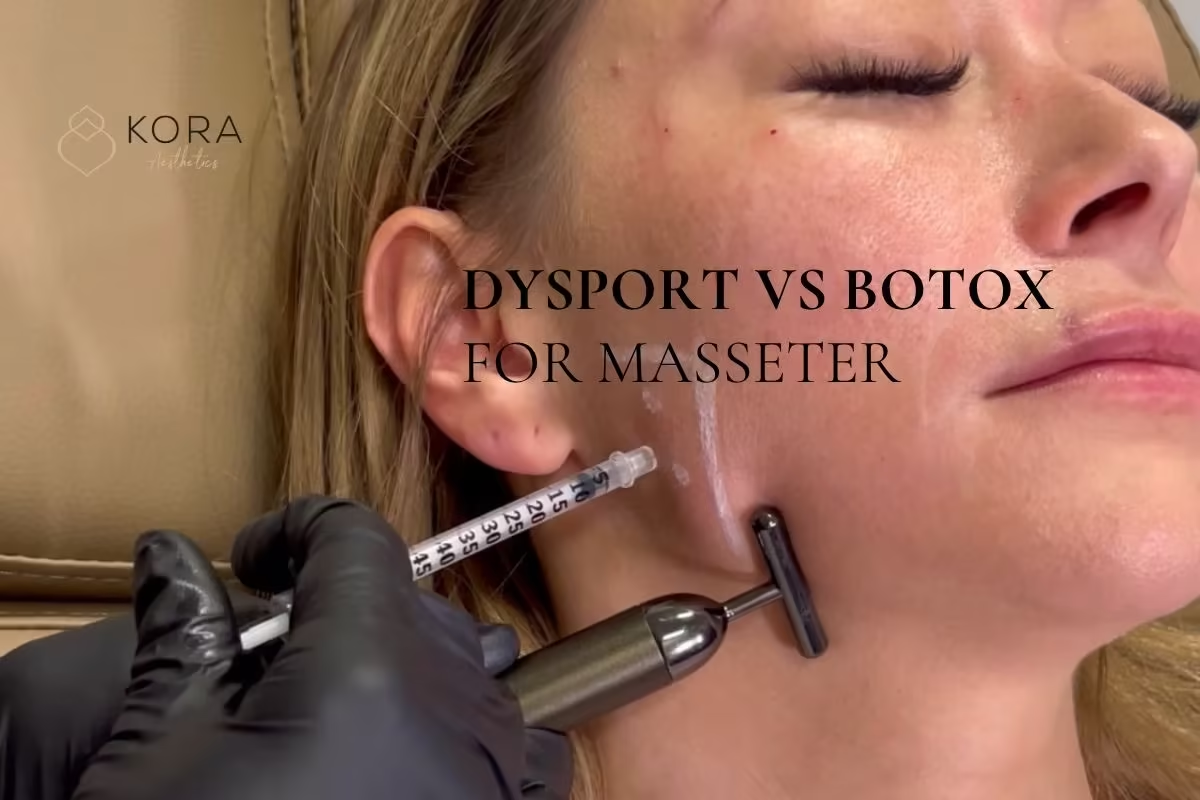
The masseter is one of the strongest muscles in the body relative to its size – it is the muscle doing the work every time you clench or chew. That strength is exactly why treating it for jaw slimming, teeth grinding or TMJ-related discomfort behaves differently from treating a facial expression line.
Worth knowing: using a neuromodulator on the masseter for jaw slimming or teeth grinding is an off-label use – well-established in practice and widely used, but not an FDA-approved indication the way migraine or excessive sweating treatment is. This does not make it experimental; it means the specific application has not gone through the formal approval process for that indication.
Botox or Dysport for the masseter?
Both work. The difference that sometimes matters here is the same one covered in Dysport vs Botox: How to Choose – Dysport’s molecule tends to spread further from the injection point. For a large, bulky muscle like the masseter, that broader spread can actually be an advantage, helping distribute the effect evenly across a bigger area with fewer injection points.
The trade-off is precision. The masseter sits close to muscles involved in smiling, and more spread means slightly less certainty that the effect stays exactly within the masseter’s borders. In practice, both products are used successfully for this area, and the choice often comes down to your injector’s assessment of your specific jaw anatomy rather than one product being categorically better.
Units and cost for this area
| Product | Typical units (both sides) | Approximate cost |
|---|---|---|
| Botox, at $13.50/unit | 40 to 60 units | $540 to $810 |
| Dysport, at $4.50/unit (using the ~2.5x conversion) | 100 to 150 units | $450 to $675 |
These are typical ranges, not a quote – the masseter varies more in size and strength between people than most facial muscles, so an assessment matters more here than average. See current pricing for exact rates.
Why the timeline looks different here
Jaw slimming specifically takes longer to become visible than a facial line softening. The muscle relaxation happens on the usual timeline, but the visible slimming effect comes from the muscle gradually shrinking with reduced use, which takes 4 to 8 weeks to become apparent – not the 2-week full-effect window that applies to facial areas generally.
Duration also tends to run longer here – often 4 to 6 months, sometimes more with repeated treatment, since a strong muscle treated consistently over time tends to hold results longer.
Questions people ask
Is Dysport or Botox better for masseter reduction?
Both are effective. Dysport’s broader spread can suit the masseter’s larger size, while Botox offers more precise placement. The right choice often depends on your specific jaw anatomy.
How long until I see jaw slimming results?
4 to 8 weeks. This is longer than the 2-week window for facial lines, because visible slimming comes from the muscle gradually shrinking, not just relaxing.
Is masseter Botox the same as TMJ treatment?
The treatment itself is the same injection, used for two different goals – jaw slimming and easing TMJ-related clenching and grinding. Both are off-label uses of a neuromodulator, well-established but not an FDA-approved indication.
How long does masseter Botox last?
Often 4 to 6 months, sometimes longer than facial areas, since the masseter is a strong muscle that tends to hold results well with consistent treatment.
Considering masseter treatment for jaw slimming or clenching?
A nurse practitioner-led practice in Scottsdale, Arizona, offering both Botox and Dysport.