

Rated 5.0 on Google

Medical-Grade Skincare in Scottsdale

Medical-grade skincare at KORA means ZO Skin Health and Skinbetter Science products chosen by a nurse practitioner, with a written regimen for pigment, fine lines, texture and acne. The 30-minute Scottsdale skin consultation is complimentary. Texture improves from 4 to 6 weeks, pigment and lines from 8 to 12, and results last with continued use.

  • ZO Skin Health authorized provider
  • Skinbetter Science stocked
  • Regimen written by a nurse practitioner
  • Complimentary skin consultation

Medically reviewed by Katie Manhardt, MSN, FNP-C · Updated November 2026

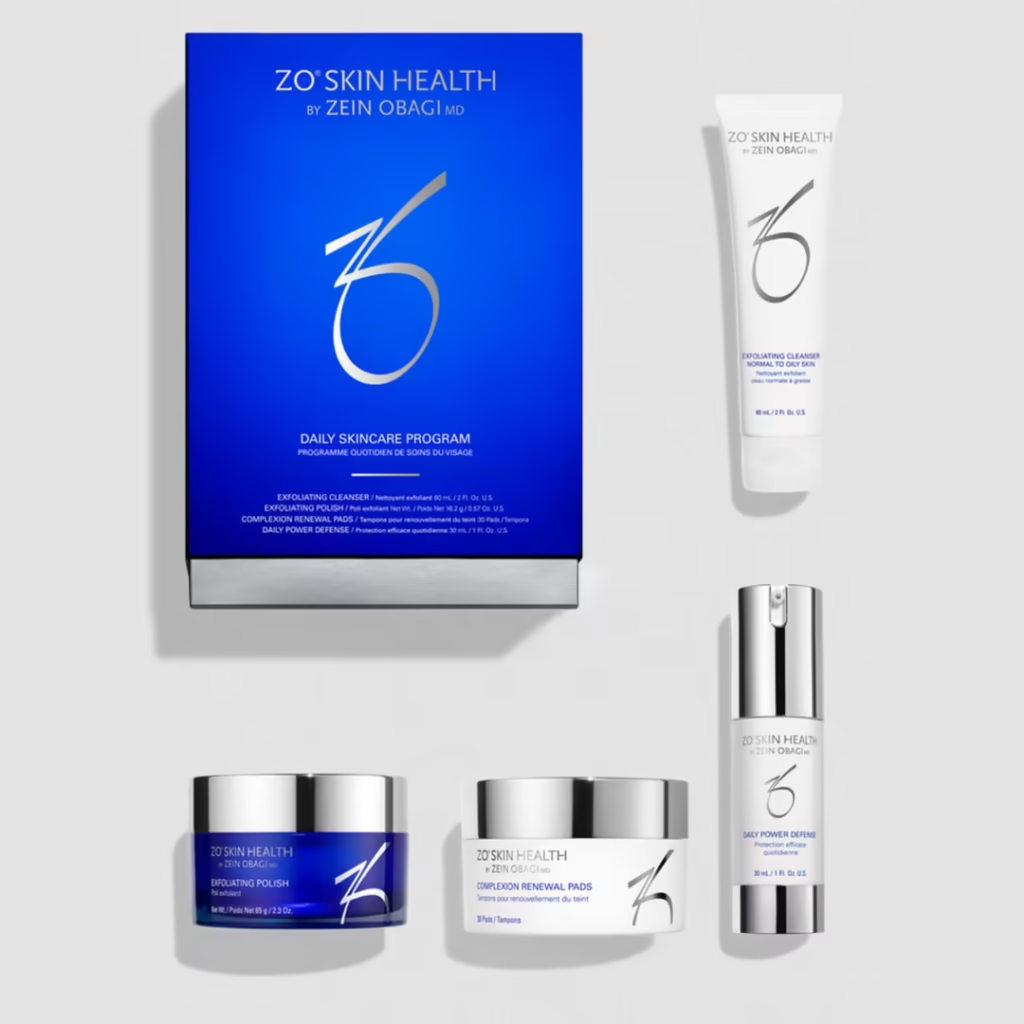
ZO Skin Health daily skincare program products displayed for medical-grade skincare in Scottsdale
Skin consultation
Complimentary
Consultation
About 30 minutes
Texture and tone
4-6 weeks
Pigment and fine lines
8-12 weeks
Starting regimen
Usually 3 products

About the treatment

What is medical-grade skincare?

Short answer. Medical-grade skincare uses clinically meaningful strengths of active ingredients, in formulas tested as finished products and chosen by a clinician. The FDA does not define the term, so judge what is in the product.

Brands
ZO and Skinbetter
Starting regimen
Usually 3 products
Texture and tone
4-6 weeks
Pigment and lines
8-12 weeks

It is

  • Higher-strength actives in formulas tested as finished products
  • Chosen for your skin type, barrier and tolerance
  • What maintains the results of peels, microneedling and injectables
  • Cumulative: daily use matters more than any single product

It is not

  • A regulated term: check the ingredients, not the label
  • A substitute for treatment when the concern is volume or movement
  • Effective when used now and then
  • A long list: a few well-chosen products do the work

How it works

  1. A look at your current routine. Bring everything, including products you have set aside. The review finds what is working and what to pause, such as an exfoliant used too often or an oxidized vitamin C.
  2. Barrier condition is assessed first. If your skin is irritated or sensitized, barrier repair comes first, and actives are introduced two to four weeks later once it is calm.
  3. Three products to begin. A cleanser suited to your skin, one active for your main concern, and a mineral SPF. That is a complete regimen and the right starting point for most people.
  4. The active is introduced gradually. Retinoids start two or three nights a week and build up over four to six weeks, which keeps dryness and peeling manageable.
  5. Reviewed at eight to twelve weeks. That is when skin visibly changes. Strength is adjusted, and a fourth product is added only if the first three are routine and there is more to treat.

Candidates

Who is medical-grade skincare for?

Short answer. Medical-grade skincare suits adults who want to improve sun damage, pigment, fine lines, texture or acne-prone skin, or keep treatment results. A nurse practitioner reviews your products and writes a regimen at a complimentary consultation.

A good fit

  • Yes

    Sun damage, pigment and melasma Pigment correctors and daily tinted mineral SPF help control melasma and sun spots, and pair with a VI Peel series for faster correction.

  • Yes

    Fine lines, dullness and rough texture A retinoid two or three nights a week builds collagen, refining texture at 4 to 6 weeks and fine lines at 8 to 12.

  • Yes

    Acne-prone or congested skin Prescription tretinoin is FDA-approved for acne and can be prescribed where clinically appropriate, and salicylic acid helps clear pores.

  • Yes

    Keeping treatment results, or retinoid-sensitive skin Skincare maintains peel, microneedling and injectable results, and if retinoids irritated you before, a slower start or Skinbetter's AlphaRet can help.

Wait, or choose something else

  • Wait

    Pregnant, trying to conceive or breastfeeding Retinoids and hydroquinone are avoided, and the usual advice is to pause several other actives until after pregnancy and breastfeeding.

  • Wait

    An irritated or over-exfoliated barrier Repair the barrier first with ceramides, niacinamide, glycerin and hyaluronic acid, then add actives two to four weeks later once skin is calm.

  • Wait

    Skin reacting with burning or a rash Mild dryness in the first two weeks is normal, but persistent burning, redness, swelling or a rash is a reaction, so contact us.

  • Wait

    Volume loss, movement lines or acne scars Skincare improves skin quality, not structure, so volume needs filler, movement lines Dysport, and acne scars and texture SkinPen microneedling.

Results

Medical-grade skincare before and after

Short answer. Texture and brightness change at about 4 to 6 weeks, and pigment and fine lines at 8 to 12, when your regimen is reviewed. Retinoids keep improving skin for six months and beyond with continued daily use.

4-6 weeks texture and tone · 8-12 weeks pigment and fine lines · 3 products to start

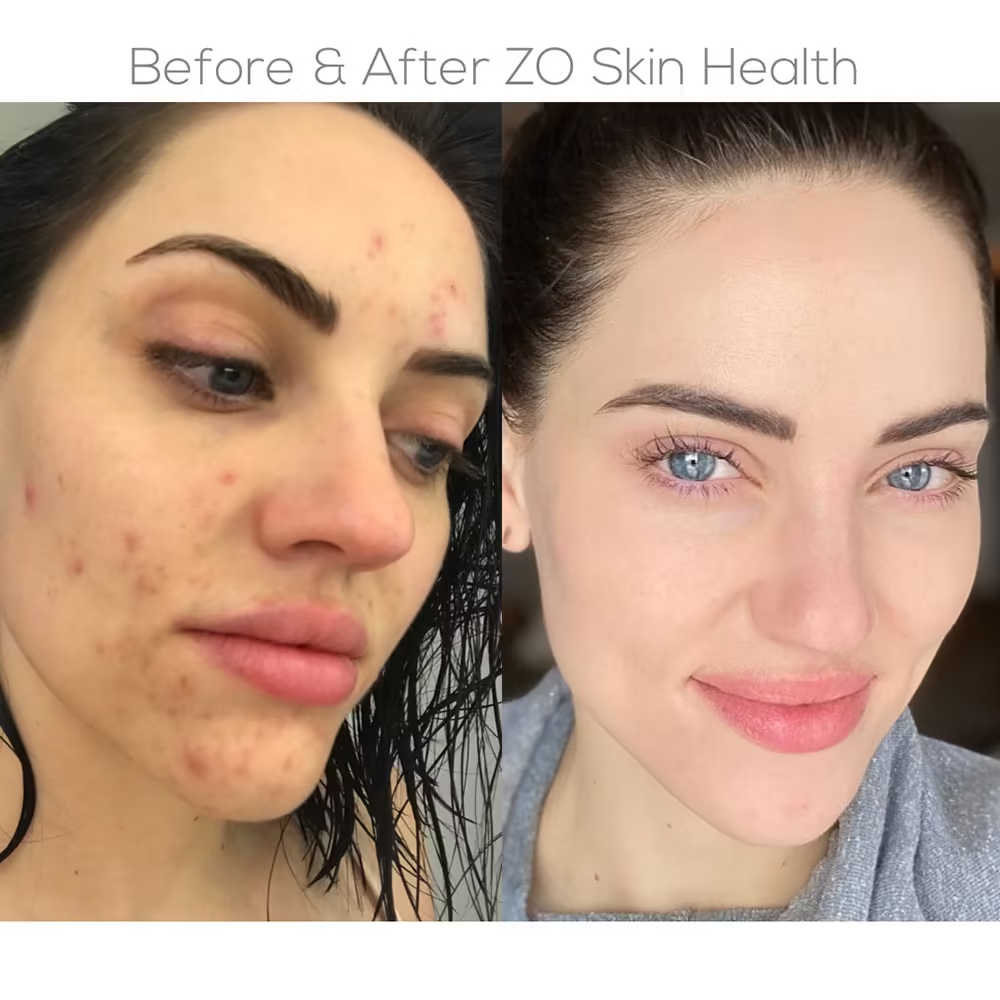
Before and after results of ZO Skin Health medical-grade skincare treatment for acne and hyperpigmentation in ScottsdaleBeforeAfter
Medical Grade SkincareMedical-Grade Skincare patient #345Dramatic clearing of breakouts and balanced complexion with ZO Skin Health medical-grade skincare in Scottsdale, AZ.Read the full case
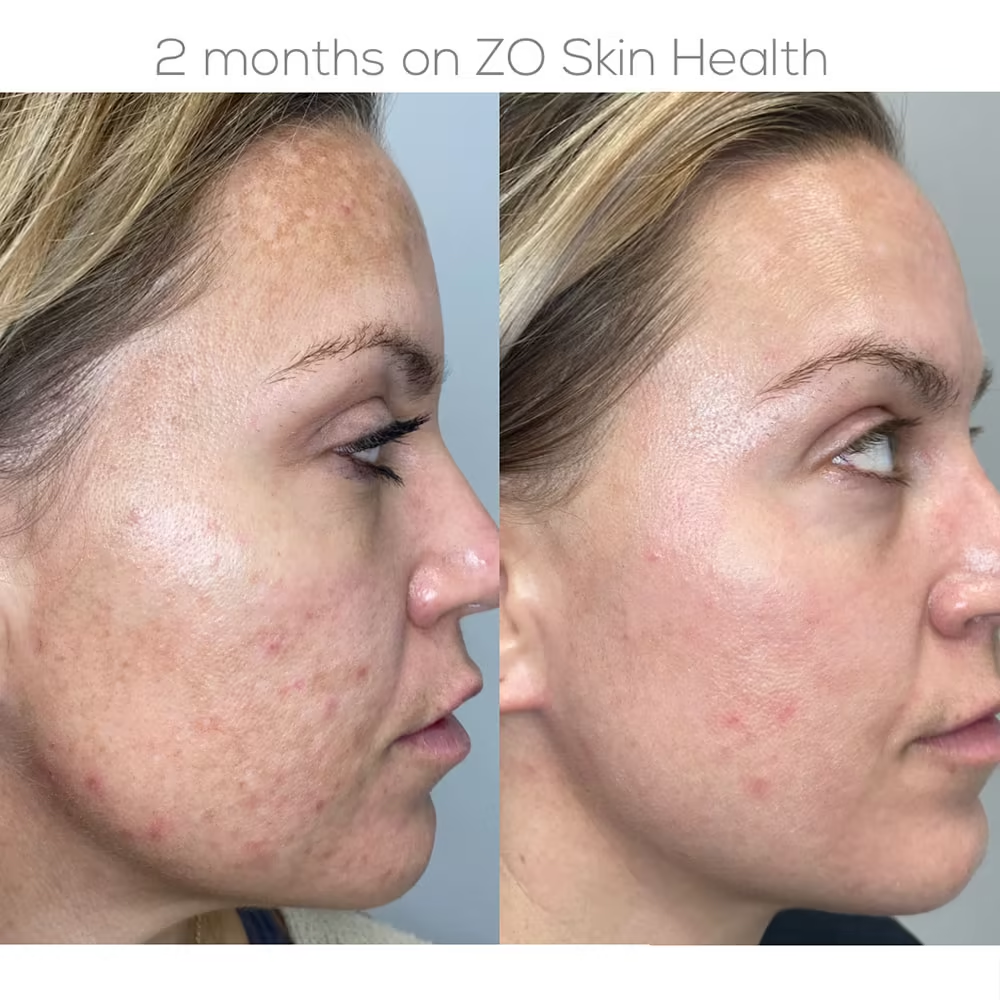
Profile view demonstrating significant reduction in forehead pigmentation, acne breakout spots, and refined skin texture in ScottsdaleBeforeAfter
Medical Grade SkincareMedical-Grade Skincare patient #346Visible smoothing of skin texture, reduced forehead melasma, and diminished active breakouts after ZO Skin Health skincare in ScottsdaleRead the full case
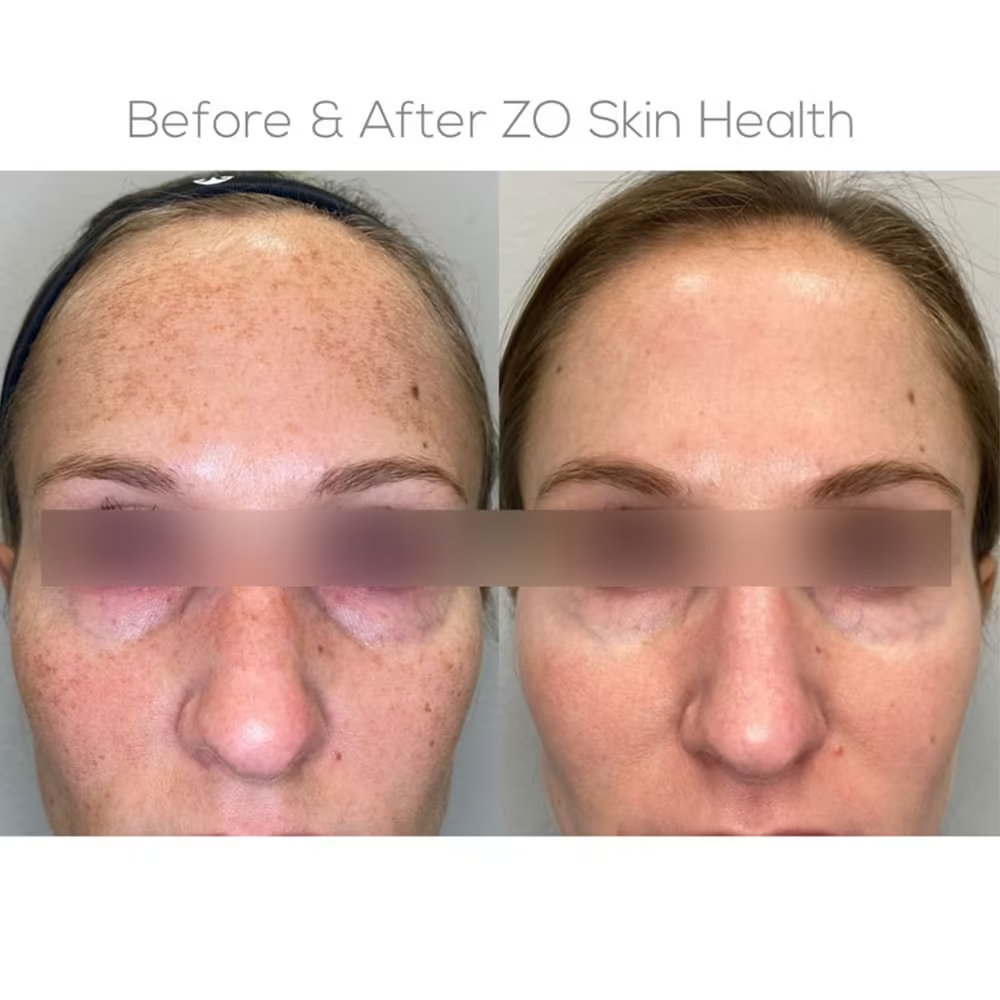
Frontal before and after view displaying dramatic reduction in forehead sun damage and freckling after medical-grade skincare in ScottsdaleBeforeAfter
Medical Grade SkincareMedical-Grade Skincare patient #347Clear transformation showing faded sun spots, balanced skin tone, and enhanced overall glow after a ZO Skin Health regimen in ScottsdaleRead the full case

Results depend on consistent daily use and vary by skin. Photos show KORA patients.

Shop medical-grade skincare

Cost

How much does medical-grade skincare cost in Scottsdale?

Short answer. ZO Skin Health Firming Serum Accelerated is $75, and other ZO and Skinbetter products are priced individually, with no kits or minimum. A first regimen is usually three products; the consultation and written regimen are complimentary.

Skin consultationComplimentary30 minutes
ZO Firming Serum Accelerated$75Per product
SkinPen Biocellulose Mask$20Per product
ZO Skin Health rangePriced individuallyPer product
Skinbetter Science rangePriced individuallyPer product
  • Skin and barrier assessment
  • Review of the products you already use
  • Written morning and evening routine
  • Ramp-up schedule for any active

Full medical grade skincare price list and pricing questions

ProductSold asPricedCost
ZO Skin Health Firming Serum AcceleratedPer productPer product$75
SkinPen Premium Biocellulose MaskPer productPer product$20
ZO Skin Health rangePer productPer productPriced individually
Skinbetter Science rangePer productPer productPriced individually
Skin consultation and written regimenBefore you buyIncludedComplimentary

Priced separately

  • Treatments such as a VI Peel or microneedling, priced separately
  • Prescription medicines, where prescribed
How much does medical-grade skincare cost?

Products are priced individually; ZO Skin Health Firming Serum Accelerated, for example, is $75. A first regimen is usually three products, and the skin consultation is complimentary.

Do I have to buy products at my consultation?

No. The consultation is complimentary with no obligation. Some people leave with a written plan built around products they already own.

Is medical-grade skincare worth the price?

For actives, often yes: retinoids, vitamin C and pigment correctors depend on concentration, stability and testing. For cleanser and sunscreen, a good drugstore product often works and can stay in your routine.

Can I buy ZO Skin Health online?

ZO is sold through authorized providers, so a skin assessment comes first. Once your regimen is set, products are available in clinic or through KORA's online shop.

Priced individually | No kits or minimum | Consultation and written regimen complimentary

Priced individually, with no kits, bundles or minimum purchase. Prescription tretinoin is issued separately where clinically appropriate.

Why KORA for medical grade skincare

Why KORA for medical-grade skincare

Short answer. A board-certified nurse practitioner builds every regimen from your skin and current products: Katie Manhardt, an authorized ZO Skin Health provider and national clinical trainer, or Audrey Bakken, whose focus includes skin health.

  • ZO Skin Health Authorized Provider
  • Board-Certified Nurse Practitioners
  • Founder Is a National Clinical Trainer
  • Every Regimen Built by an NP
Katie Manhardt, MSN, FNP-C

Katie Manhardt, MSN, FNP-C

Founder | Nurse Practitioner

Katie Manhardt founded KORA and is an authorized ZO Skin Health provider and a SkinPen-certified provider. As a national clinical trainer she teaches injection technique and facial anatomy to other clinicians. In skincare, she treats the regimen as part of the treatment plan: a short routine matched to your barrier and tolerance, timed around any peels, microneedling or injectables so each supports the others.

Book with Katie

Audrey Bakken, NP

Audrey Bakken, NP

Aesthetic Nurse Practitioner

Audrey Bakken is a board-certified nurse practitioner with more than 23 years in medicine and over a decade in aesthetics, and skin health is one of her main areas of focus. She builds plans from each patient's own skin, concerns and long-term goals rather than a standard protocol. For skincare, that means a short regimen you will keep using, introduced at a pace your barrier tolerates, aimed at subtle, steady improvement.

Book with Audrey

What Scottsdale says about skincare at KORA

5.0on Google

Mia CoutoGoogle review

Katie is the BEST! My skin has never felt or looked better. She is truly an expert in her field and genuinely cares about her clients. Highly recommend all around!

Kelsey HarringtonGoogle review

Katie with KORA Aesthetics is amazing! She is so knowledgeable and effortlessly walked me through each step of a very needed skin care regimen. I trust her with all skin and facial needs

danielle hGoogle review

Katie helped me kickstart my journey into bettering my skin. She took the time to listen to my concerns, address my questions and helped me find the best treatment plan for me. 2 years later and I cannot thank her enough, my skin looks better than it has in a decade. This has not only translated externally on the surface but internally as well with confidence. She has helped me correct sun damage, fine lines and wrinkles through microneedling, under eye PRP, dysport, Botox and sculptra and medical grade skincare. Trust her with your face, you will be so thankful that you did!

Good to know

More about medical-grade skincare

Each topic shows its short answer. Open it for everything else.

Medical Grade Skincare in detail

Medical-grade skincare is skincare with clinically meaningful strengths of active ingredients, in formulas tested as finished products and usually sold through medical practices. The FDA does not define or regulate the term. US law recognizes cosmetics and drugs, and some actives, such as tretinoin and hydroquinone, are prescription drugs; hydroquinone has needed a prescription since the 2020 CARES Act removed it from the over-the-counter monograph. So judge a product by what is in it and how it was tested, not by its label.

Four things separate a clinical product from a general one. Active concentration: a 0.25% retinol behaves differently from a 1% retinol. Stability: L-ascorbic acid (vitamin C) oxidizes in light and air, so packaging and pH decide whether it still works. Delivery: an active has to reach the layer of skin where it acts. Testing: clinical studies on the finished formula, not only on an ingredient in a laboratory.

KORA carries ZO Skin Health and Skinbetter Science and is an authorized ZO Skin Health provider. Every regimen starts with a complimentary skin consultation and ends with a written morning and evening routine, usually three products to begin, chosen for your skin, your tolerance and the Arizona sun.

Brands
ZO Skin Health and Skinbetter Science; prescription tretinoin where clinically appropriate
Results
Texture and tone from 4-6 weeks; pigment and fine lines from 8-12 weeks
Starting regimen
Usually three: cleanser, one active (often a retinoid), mineral SPF
Consultation
Complimentary, about 30 minutes, with a written regimen

“Start with three products you will use every day. Consistency does more than a long routine you give up on.”

Katie Manhardt, MSN, FNP-C, Founder

Eight key ingredients and what they do

Short answer: Retinoids, vitamin C, pigment correctors, exfoliating acids, peptides, barrier repair and mineral SPF each target a different concern, from fine lines to melasma.

Effective regimens draw from a short list of proven ingredients. Here is what each one does, when you will see it working, and who should take care.

Mineral SPF

Every morning

The base of every regimen

Zinc oxide and titanium dioxide are the two sunscreen filters the FDA proposed in 2019 as generally recognized as safe and effective. Zinc oxide covers both UVA and UVB, and tinted formulas with iron oxides also block visible light, which matters for melasma. In Arizona, daily SPF is the base of every regimen.

Retinoids

Results at 8-12 weeks

The most studied active

The most studied anti-aging actives. Retinol, retinaldehyde and prescription tretinoin speed cell turnover and stimulate collagen. Strength and ramp-up are chosen so your skin adjusts. Retinoids are avoided during pregnancy.

Vitamin C

Results at 8-12 weeks

Use it fresh

An antioxidant that helps neutralize free radicals from UV exposure and supports collagen. L-ascorbic acid is unstable, so packaging and pH matter. A serum that has turned orange or brown has oxidized and should be replaced.

Growth factors and peptides

Results at 12 weeks

Gentler alternative

Signaling molecules that support repair and collagen production. A gentler option for sensitive skin or for people who cannot tolerate retinoids, with more gradual results.

Pigment correctors

Results at 8-16 weeks

Used in cycles

Hydroquinone (prescription), tranexamic acid, azelaic acid, kojic acid, arbutin and niacinamide reduce melanin production or transfer. Used for melasma and sun spots; hydroquinone is cycled rather than used indefinitely.

Chemical exfoliants

Results at 4-8 weeks

Frequency matters

Glycolic, lactic and salicylic acids clear the surface and refine texture, and salicylic acid also clears pores. Frequency matters more than strength: exfoliating too often damages the barrier.

Barrier repair

Results at 2-4 weeks

Often the first step

Ceramides, niacinamide, glycerin and hyaluronic acid restore a damaged barrier. If skin is already irritated, this comes first and actives wait two to four weeks.

Prescription tretinoin

Results at 12 weeks

By prescription

The strongest topical retinoid, available only by prescription and FDA-approved for acne and, in some formulations, for fine wrinkles and mottled pigment from sun damage. Expect a few weeks of dryness and flaking while skin adjusts. Prescribed where clinically appropriate, with a ramp-up plan.

Your skin consultation and timeline

Short answer: A 30-minute consultation reviews what you use now and ends with a written regimen, with texture changing at 4 to 6 weeks and pigment at 8 to 12.

Total time: About 30 minutes

  1. 01
    Bring what you use

    Everything you use, including products you have set aside. Photos of the labels work too.

  2. 02
    Skin assessment

    Skin type, barrier condition, pigment type, sun damage, sensitivity and tolerance, plus how many steps fit comfortably into your day.

  3. 03
    What to keep

    Pausing one product that causes irritation can do more for your skin than adding three new ones.

  4. 04
    Your regimen, written down

    Morning and evening, in order, with a ramp-up schedule for any active, ready to follow at home.

  5. 05
    Review at about eight weeks

    Tolerance and progress are checked before anything changes. Visible change in pigment and fine lines takes 8 to 12 weeks, so this is the right time to review.

Medical-grade skincare takes 4 to 6 weeks to improve texture and brightness and 8 to 12 weeks to change pigment and fine lines, with continued daily use. Retinoids often cause mild dryness or flaking in the first two weeks, which settles as the skin adapts.

Week 1-2Retinoids commonly cause mild dryness or flaking as turnover speeds up. Start two or three nights a week and build from there.
Week 2-4Irritation eases as skin adapts. If it has not by week four, strength or frequency is adjusted.
Week 4-6Texture and brightness improve. This is the first point to judge how your skin is responding.
Week 8-12Reduced pigment and new collagen start to show. This is the review point, where the regimen is refined.
Month 6Results keep building with consistent use, especially for fine lines and sun damage.
OngoingArizona summers call for more protection and often less exfoliation, so the regimen is adjusted with the seasons.

Planning ahead: Preparing for an event? Start a retinoid at least twelve weeks ahead, so your skin has adjusted and the result is visible on the day.

ZO, Skinbetter and where medical-grade matters

Short answer: ZO Skin Health is protocol-based with strong actives, Skinbetter tests finished formulas, and medical-grade makes the biggest difference for actives rather than basics.

Protocol-based, with strong actives

ZO Skin Health was founded by dermatologist Dr. Zein Obagi and is built around protocols: products designed to be used together in sequence rather than one at a time. Its actives are strong, which is why the range is sold through authorized providers. Used with guidance on strength and pacing, it suits sun damage, pigment, acne-prone skin and early aging. KORA is an authorized ZO provider and chooses from the range according to what your skin tolerates, adjusting as it responds.

  • Authorized ZO Skin Health provider
  • Protocols designed to work together
  • Strong actives, paced by a nurse practitioner

Tested as finished formulas

Skinbetter Science tests finished products in clinical studies rather than relying only on data about single ingredients, which matters because an active that works in a laboratory may not be delivered by a given formula. Its AlphaRet technology combines a retinoid and lactic acid, an alpha hydroxy acid, in one molecule, designed to give retinoid results with less irritation. That makes it an option if retinoids have irritated your skin before. KORA carries it alongside ZO and chooses between them, or combines them, based on tolerance and goals.

  • Finished formulas tested clinically
  • AlphaRet for retinoid-sensitive skin
  • Chosen for your tolerance and goals

A regimen built for Arizona sun

Scottsdale has a high UV index for most of the year, and the cumulative exposure adds up. That shapes a regimen in three ways. Mineral SPF is the base the rest of the routine is built on, reapplied when you are outdoors. Pigment correction is maintained over time, because the sun keeps triggering it. And exfoliation is often reduced in summer, because a calm barrier copes better with strong UV. Regimens are adjusted between seasons for this reason.

  • Mineral SPF 30+ daily, reapplied
  • Pigment correction maintained over time
  • Gentler exfoliation in summer

Medical-grade products make the biggest difference for actives, and the least for basics. Good skincare comes from many places. Some drugstore products, especially sunscreens and gentle cleansers, are excellent and can stay in your routine. Department store skincare often offers pleasant textures, with active strengths that vary from product to product. Medical-grade ranges stand out on active concentration, formulas tested as finished products, and stable delivery of fragile ingredients such as vitamin C. Paired with a clinician who judges how your skin tolerates actives, that turns a set of products into a regimen.

Keep
A good drugstore SPF or cleanser
Upgrade
Your active
Ease off
Frequent exfoliation
  • Drugstore: often excellent for sunscreen and gentle cleansers, lighter on actives
  • Department store: pleasant textures, with varied active strengths
  • Medical-grade: higher concentrations, tested formulas, stable delivery
  • A nurse practitioner judging your tolerance is part of every regimen

What skincare does and where treatments help

Short answer: Skincare improves tone, texture, pigment and barrier, while volume, movement lines and scar remodeling need a peel, microneedling or injectables.

Skincare improves skin quality: tone, texture, pigment and barrier function. Volume, muscle movement and scar remodeling need treatments. Most plans combine both: skincare every day, treatments a few times a year. If your concern is brown patches, skincare plus a peel series works faster than either alone.

CompareMedical-grade skincareVI PeelSkinPen microneedlingInjectables
Best forTone, texture, pigment, barrier, preventionMelasma, sun spots, uneven toneAcne scars, pores, textureVolume loss and movement lines
What it doesHigher-strength actives applied dailyChemically renews the outer layersRebuilds collagen through controlled micro-injuryFiller restores volume; Botox relaxes muscle
Onset4-12 weeksWithin about a week per peelWeek 2 onwardImmediate to 2 weeks
Typically lastsWith continued useMaintained 2-3 times a yearLong-lasting; maintain 1-2 times a year3 months to 2 years
Ask yourselfIs it skin quality rather than structure?Do you need faster pigment correction?Does your skin feel uneven to the touch?Is the concern structure rather than surface?

Skincare helps the results of every treatment on this list last longer.

Starting your regimen and caring for your barrier

Short answer: Add one active at a time, start retinoids two to three nights a week, use mineral SPF daily, and contact us for burning or a rash.

Starting a new regimen

The first six weeks

  • Introduce one new active at a time, with at least two weeks between additions, so you can see how your skin responds to each.
  • Start retinoids two or three nights a week, not nightly, and build up over four to six weeks.
  • Apply retinoids to completely dry skin. Damp skin increases penetration and irritation.
  • Use mineral SPF 30 or higher every morning from day one. Retinoids and acids increase sun sensitivity.
  • Pause exfoliating acids and scrubs while you introduce a retinoid, since it already speeds turnover.
  • Some dryness or flaking in the first two weeks is normal. If it has not settled by week four, let us know so strength or frequency can change.
  • Tell us if you are pregnant, trying to conceive or breastfeeding. Retinoids are avoided in pregnancy, and because there is not enough safety data for several other actives, the usual advice is to wait until after pregnancy and breastfeeding.

Keeping it working

Ongoing

  • Consistency beats intensity: three products used daily do more than a longer routine used now and then.
  • Give results at least eight weeks before judging them.
  • Reduce exfoliation in summer. An irritated barrier under high UV pigments more easily.
  • Replace vitamin C when it darkens. Oxidized L-ascorbic acid is less effective and can irritate.
  • Reapply SPF every two hours outdoors and after swimming or sweating. One morning application is not enough here.
  • Cycle pigment correctors such as hydroquinone rather than using them indefinitely; you will be told when to pause.
  • Pause retinoids and acids for 5 to 7 days around a VI Peel or microneedling, and restart once skin has healed.
  • Contact us for persistent burning, significant redness, swelling or a rash. That is a reaction, not normal adjustment.
Contact us if: (480) 630-7566

You notice persistent burning, significant redness or swelling, or a rash. Mild dryness in the first two weeks is part of adjusting; lasting irritation is a reaction, and the regimen should change.

Medical-grade skincare questions

Short answer: 18 short answers on cost, brands, ZO Skin Health in Scottsdale, retinoids, tretinoin, vitamin C, SPF for Arizona, melasma, pregnancy and timing.

What is medical-grade skincare?

Medical-grade skincare is skincare with clinically meaningful strengths of active ingredients, in formulas tested as finished products and usually sold through medical practices. The FDA does not define the term, so check what is in the bottle. A clinician also chooses strengths and pacing based on what your skin tolerates.

What are the best medical-grade skincare brands?

No single brand is best; the right one matches your skin and is one you will use daily. KORA carries ZO Skin Health, founded by dermatologist Dr. Zein Obagi and protocol-based with strong actives, and Skinbetter Science, which tests finished formulas clinically and makes AlphaRet for skin that finds retinoids irritating.

Where can I buy ZO Skin Health in Scottsdale?

Buy it from an authorized provider. KORA Aesthetics, at 10505 N 69th St in Scottsdale, is an authorized ZO Skin Health provider. ZO is sold through providers, so a skin assessment comes first; after that, products are available in clinic or through KORA's online shop.

How much does medical-grade skincare cost in Scottsdale?

Products are priced individually, with no kits or minimum; ZO Skin Health Firming Serum Accelerated, for example, is $75. A first regimen is usually three products. The skin consultation with a written regimen is complimentary, with no obligation to buy.

Is medical-grade skincare worth it?

For actives, generally yes. Retinoids, vitamin C and pigment correctors depend on concentration, stability and delivery, and tested formulas make a measurable difference. For sunscreen and basic cleansers, a good drugstore product often works well and can stay in your routine.

How many skincare products do I need?

Three, to start: a cleanser, one active for your main concern, and a mineral SPF. That is a complete regimen. Use those consistently for about eight weeks before adding a fourth, so you can see what each product does and your barrier stays calm.

How long does medical-grade skincare take to work?

Texture and brightness change at about four to six weeks; pigment and fine lines take eight to twelve weeks. Retinoids keep improving skin for six months and beyond with steady use. Judge a regimen at the eight to twelve week review, not in the first fortnight.

How do I start a retinoid without peeling?

Start slowly: a pea-sized amount on completely dry skin two or three nights a week, building up over four to six weeks. Pause exfoliating acids while you introduce it, and moisturize well. Some dryness in the first two weeks is normal; irritation past week four means the strength or frequency should change.

What does tretinoin do, and does it need a prescription?

Tretinoin speeds cell turnover and builds collagen, and yes, it needs a prescription in the US. It is the strongest topical retinoid, FDA-approved for acne and, in some formulations, for fine wrinkles, mottled pigment and roughness from sun damage. Expect dryness and flaking in the first weeks. A nurse practitioner can prescribe it where clinically appropriate.

Why does my vitamin C serum turn orange?

It has oxidized. L-ascorbic acid is unstable in light, heat and air, and once it turns orange or brown it is less effective and can irritate, so it is time to replace it. Opaque, airless packaging and the right pH help a vitamin C serum stay fresh.

Can I use retinol after Botox or microneedling?

After Botox, yes, usually from the next day; after microneedling or a peel, wait. Retinol does not change how Botox works, though a common suggestion is to skip it the evening of treatment while you avoid rubbing the area. After microneedling or a VI Peel, pause retinoids and acids for 5 to 7 days until it heals.

What SPF should I use in Arizona?

Use a broad-spectrum mineral SPF 30 or higher with zinc oxide every morning, and reapply every two hours outdoors or after sweating or swimming. With melasma, choose a tinted formula, because its iron oxides add protection against visible light. In this climate SPF is the base of every regimen.

Can skincare treat melasma?

Skincare can control melasma but not cure it, because it is chronic and tends to return. Pigment correctors such as hydroquinone, tranexamic acid and azelaic acid reduce melanin production, and daily tinted mineral SPF blocks the triggers. Combined with a VI Peel series, this is a common approach.

Should I change my routine in summer?

In Scottsdale, usually yes. Higher UV calls for more frequent SPF reapplication and often less exfoliation, because a calm barrier handles strong sun better and irritated skin pigments more easily. Regimens are adjusted between seasons, and winter is often the easier time to increase a retinoid.

Is skincare safe during pregnancy?

Some of it is. Retinoids, including retinol and tretinoin, are avoided in pregnancy, and hydroquinone usually is too. Because there is not enough safety data for several actives, the usual advice is to wait until after pregnancy and breastfeeding; mineral SPF and azelaic acid are often used instead. Tell us if you are pregnant, trying to conceive or nursing.

Can I keep my current products?

Often, yes. Bring everything you use, including products you have set aside, and each one is checked against your skin and goals. Good cleansers and sunscreens frequently stay. What usually changes is an active that is too strong, too weak or oxidized.

Do you treat patients from Paradise Valley?

Yes. KORA is on 69th Street just south of Shea Boulevard, inside Scottsdale and a few hundred yards from the Paradise Valley town line, so most of Paradise Valley is a 5 to 10 minute drive. The practice also serves North Scottsdale, Arcadia, Phoenix, Cave Creek and Fountain Hills.

Where in Scottsdale is KORA Aesthetics?

KORA Aesthetics is at 10505 N 69th St, Suite 1300, Scottsdale, AZ 85253, on 69th Street just south of Shea Boulevard, with free private parking. The practice is appointment only. Book a complimentary skin consultation online or call (480) 630-7566.

Thirty minutes, all about your skin.

Bring everything you use. You will leave knowing what to keep, the three products best suited to your skin, and a written routine. The consultation is complimentary, with no obligation to buy.

Book a consultation

KORA Aesthetics · 10505 N 69th St, Suite 1300, Scottsdale, AZ 85253 · (480) 630-7566

Worried about leaving with a long list of products?

A first regimen is usually three products, and sometimes none if what you own already works. There is no obligation to buy.

Found retinoids irritating before?

Irritation is often about pacing rather than intolerance. Starting two or three nights a week helps, and Skinbetter's AlphaRet is designed for retinoid-sensitive skin.

Not sure your current products are working?

Bring them. Each one is checked, including whether your vitamin C has oxidized, and the ones that suit your skin stay.

Wondering how skincare works with treatments?

They support each other. Skincare holds treatment results, and for tone, texture and pigment a consistent regimen keeps working between visits.

Medical-grade skincare for Scottsdale, Paradise Valley and nearby

KORA is on 69th Street just south of Shea Boulevard, inside Scottsdale and a few hundred yards from the Paradise Valley town line. Patients come from across the Valley.